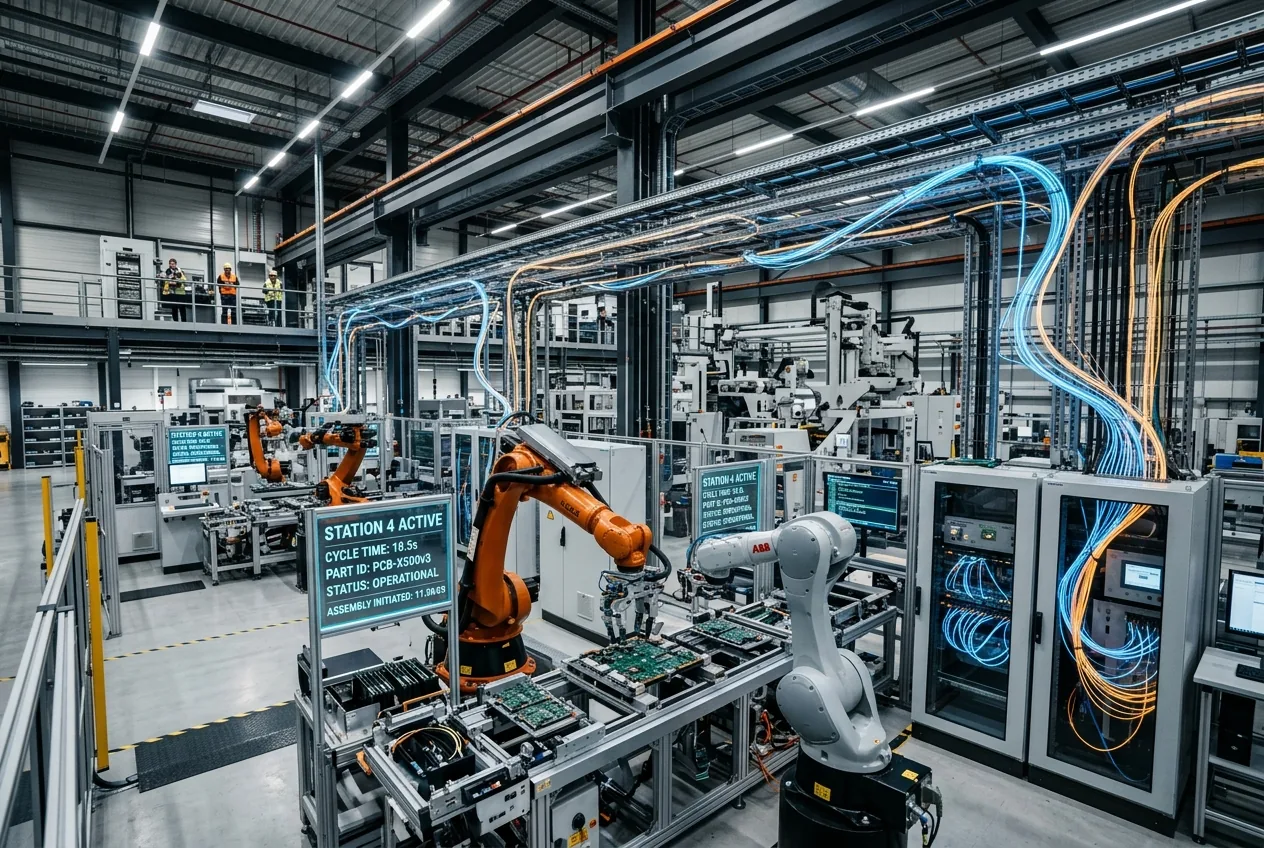
Federal oversight of frontier artificial intelligence has undergone an abrupt structural shift. With the executive branch clearing a direct path for OpenAI to deploy its next-generation GPT-5.6 architecture, the national posture on high-compute machine learning has pivoted from precautionary containment to accelerated industrial mobilization. The decision effectively dismantles several institutional checkpoints established over the previous four years, prioritizing raw domestic compute velocity and market deployment over bureaucratic evaluation cycles.
For enterprise developers and industrial engineers, this regulatory clearance removes the cloud of uncertainty that has hung over multi-billion-dollar infrastructure investments. GPT-5.6 represents an architectural step change beyond current transformer limits, integrating extended reasoning traces with high-density multi-modal sensory inputs designed to interface directly with physical systems and complex enterprise logic. By clearing this model for commercial and public sector distribution, the administration is treating frontier models not as existential risks to be sandboxed, but as foundational utility assets equivalent to power grids, telecommunications backbones, and heavy industrial machinery.
The Dismantling of Compute-Threshold Gatekeeping
The regulatory mechanism that previously slowed the release of cutting-edge foundational models was anchored in compute accounting. Under earlier White House policies, any training run exceeding 10^26 floating-point operations (FLOPs) triggered mandatory federal notifications, comprehensive red-teaming disclosures, and extensive cybersecurity audits submitted to the National Institute of Standards and Technology (NIST). These thresholds created a de facto pre-market review process that engineering teams warned would stall American deployment cycles while foreign rivals moved forward unencumbered.
The current administration has dismantled that operational paradigm, replacing administrative bottlenecks with an explicit mandate to fast-track domestic frontier rollouts. The clearing of GPT-5.6 signals that regulatory approval is no longer contingent upon exhaustive, open-ended safety reviews conducted by centralized civil agencies. Instead, oversight has transitioned to a post-market, critical-infrastructure liability framework that grants hyperscalers the autonomy to deploy models as soon as their internal alignment and performance metrics meet baseline commercial viability.
This shift is not merely philosophical; it carries severe logistical and economic implications for how frontier clusters are constructed. Compute providers are no longer required to partition hardware to avoid triggering artificial FLOP counters, allowing engineering teams to run massive, unbroken training runs across hundreds of thousands of interconnected GPUs. By treating the model lifecycle as a standard manufacturing and distribution problem rather than an emergency regulatory concern, the federal government has fundamentally reduced the compliance overhead that previously drained engineering resources.
Architectural Maturation Behind the Next Frontier Tier
While the political maneuvering has captured public attention, the engineering specifications of GPT-5.6 reveal why federal clearance was so fiercely contested. The model departs significantly from pure next-token prediction paradigms, incorporating a hybrid architecture that blends test-time compute scaling with dense symbolic verification routines. In practical terms, this allows the system to validate intermediate calculation steps against formal logical constraints before generating an external output.
From an industrial perspective, this algorithmic upgrade is essential for moving software beyond conversational novelties into high-consequence automation. Previous iterations suffered from catastrophic drift and stochastic hallucinations, disqualifying them from autonomous supervisory control in chemical processing, power distribution, and precision assembly lines. GPT-5.6 reportedly incorporates a dedicated policy validation layer that enforces rigid deterministic constraints on critical output variables, satisfying baseline enterprise demands for structural reliability.
Furthermore, the physical footprint required to train and host this architecture highlights a growing dependency on raw energetic throughput. Training runs of this magnitude demand gigawatt-scale data center infrastructure, specialized liquid-cooling manifolds, and tightly coupled optical interconnect fabrics capable of sustaining petabits of bandwidth across vast server arrays. By approving the rollout, federal authorities have also signaled an implicit commitment to resolve grid interconnection delays and fast-track power generation permits for the physical sites that host these monumental workloads.
Bridging Frontier Software to the Physical Economy
The strategic value of GPT-5.6 lies far beyond text synthesis or synthetic data generation; its primary industrial utility emerges at the intersection of machine learning and physical robotics. For years, advanced manufacturing has been constrained by the rigidity of traditional industrial controllers. Programmable Logic Controllers (PLCs) execute pre-coded routines with microsecond precision, but they fail instantly when presented with unmodeled variations in their operating environment, such as a misaligned pallet, a deformed structural stamping, or an unexpected thermal gradient.
Geopolitical Dominance and the Compute Supremacy Doctrine
The acceleration of domestic model deployments cannot be analyzed in isolation from the escalating technological cold war between the United States and China. Washington’s clearance of GPT-5.6 is an aggressive play in economic statecraft, designed to cement the dominance of the American artificial intelligence stack across allied economies. By establishing an open regulatory runway for domestic frontier models, the administration aims to preempt open-weight alternatives emanating from Chinese research institutions.
American industrial strategy has recognized that the software layer dictates the hardware supply chain. If multinational corporations standardize their operations, enterprise resource planning, and industrial automation on domestic American models, the entire global market remains tethered to domestic silicon, domestic cloud infrastructure, and American technical standards. Conversely, regulatory friction that delays domestic rollouts creates a vacuum rapidly filled by state-subsidized foreign competitors eager to provide cheaper, less restricted foundational models to the developing world.
The Operational Risks of Premature Industrial Deployment
Despite the commercial optimism surrounding the administration’s pro-growth stance, seasoned operations engineers understand that removing federal safety checkpoints introduces non-trivial operational friction into real-world deployments. Theoretical alignment metrics developed in controlled laboratory environments routinely degrade when exposed to the chaotic, noisy conditions of live manufacturing plants and dynamic logistics hubs.
When a large language model fails in an enterprise customer support setting, the damage is measured in customer churn and reputational costs. However, when an autonomous system integrated into a continuous cold-rolling mill, a pharmaceutical cleanroom, or a high-voltage substation encounters an out-of-distribution input, the consequences are measured in catastrophic mechanical failure, long-term line shutdowns, and immediate human safety hazards. Shifting the burden of validation from centralized public audits to individual enterprise customers will inevitably reveal brittle edge cases that were overlooked during accelerated training cycles.
The true test for OpenAI and the organizations adopting GPT-5.6 will not be theoretical benchmark scores on synthetic reasoning exams, but the mean time between failures (MTBF) when managing physical equipment. If enterprise adopters encounter persistent instability or unpredictable latency spikes during critical operational windows, the economic value proposition of these advanced models will rapidly diminish. Stripping away federal red tape has granted hyperscalers the speed they demanded, but it has also stripped away their political cover: the performance, safety, and reliability of the next industrial era now rest entirely on the shoulders of the engineers building it.




Comments
No comments yet. Be the first!