In a move that has recalibrated the financial landscape of the artificial intelligence industry, Anthropic has officially surpassed OpenAI to become the world’s most valuable AI startup. Following a staggering $65 billion Series H funding round, the Claude creator is now valued at $965 billion post-funding. This valuation not only eclipses OpenAI’s most recent $852 billion mark but places Anthropic on the precipice of the trillion-dollar club, a rarefied atmosphere currently inhabited only by the world’s most dominant publicly traded technology giants.
The mechanics of a $47 billion revenue surge
From a mechanical engineering and systems perspective, this revenue surge is indicative of a massive scale-up in inference cycles. Enterprise customers are shifting from experimental pilots to full-scale production deployments. This transition requires not just better models, but more reliable API uptime and lower latency—areas where Anthropic has heavily invested. The company’s focus on interpretability research—essentially the "how" and "why" of neural network decision-making—has become a selling point for regulated industries like finance and healthcare, where a "black box" model is often a legal liability.
The $65 billion in new capital is earmarked for three specific pillars: advancing safety research, expanding compute capacity, and hardening the supply chain infrastructure. In the current market, capital is effectively a proxy for compute, and compute is a proxy for future intelligence. By securing this volume of cash, Anthropic is insulating itself against the rising costs of the hardware required to train next-generation models that will likely require ten times the parameters of current systems.
The five-gigawatt power play and the Amazon alliance
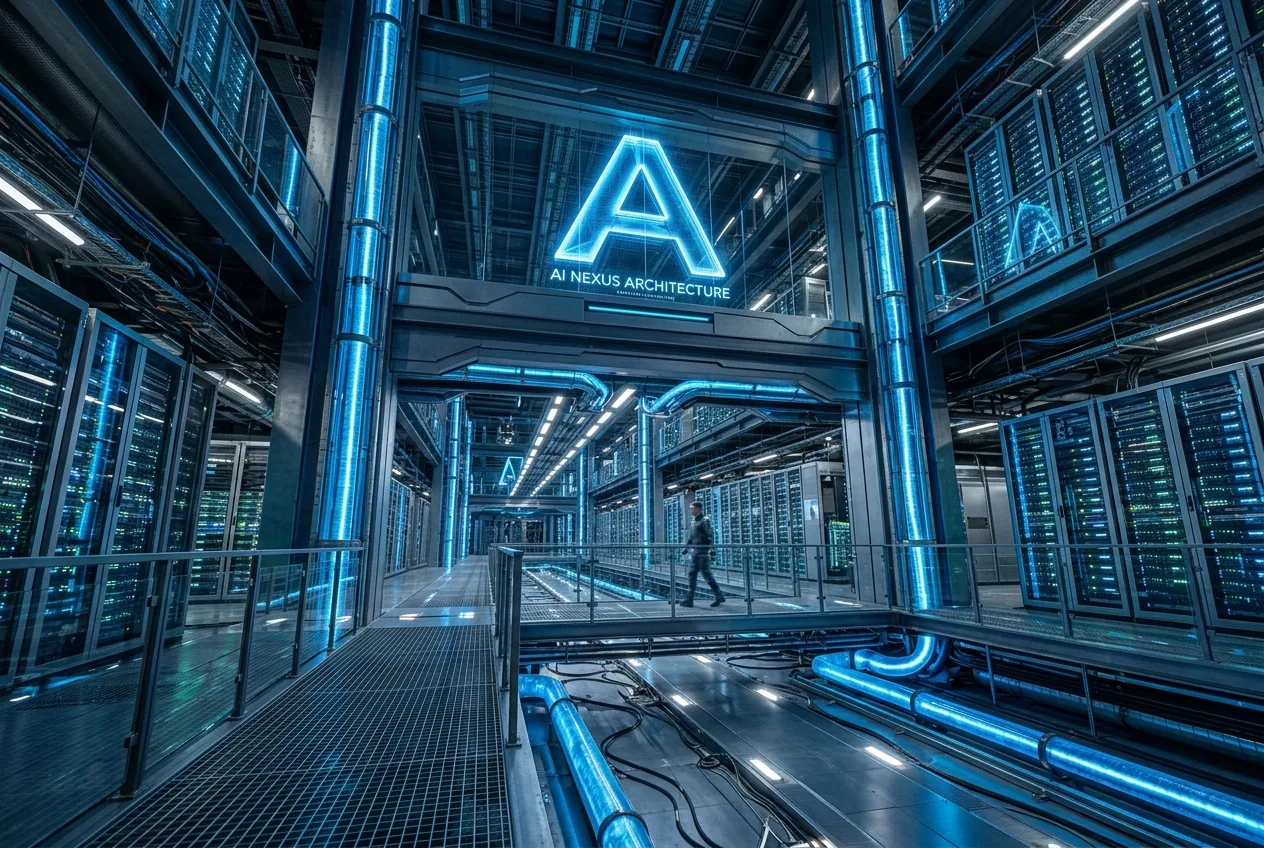
Perhaps the most technically significant aspect of Anthropic’s growth is its deepening infrastructure relationship with Amazon. The company has committed over $100 billion to Amazon over the next decade. Central to this deal is the reservation of 5 gigawatts (GW) of compute power. To translate that into industrial terms, 5 GW is enough to power approximately 3.75 million homes simultaneously. This commitment highlights the true bottleneck of the AI era: not just silicon, but the electrical grid and the cooling infrastructure required to keep tens of thousands of GPUs from melting down.
Anthropic’s strategy involves diversifying its compute sources to mitigate the risk of any single point of failure. While Amazon remains the primary hyperscale partner, the company has also inked deals with Google, Broadcom, and CoreWeave. These partnerships are critical for maintaining the high-bandwidth throughput required for Claude’s real-time processing capabilities. By spreading its workload across multiple providers, Anthropic is building a more resilient "supply chain of intelligence" than its competitors, who are often tied more exclusively to a single cloud provider’s roadmap.
Furthermore, the company is looking beyond traditional terrestrial data centers. Recent partnerships with SpaceX to utilize GPUs in the Colossus 1 and Colossus 2 clusters suggest a move toward edge computing on a global scale. There are even indications that Anthropic is exploring data centers in space, a move that would solve for thermal management by leveraging the vacuum of the exosphere and provide low-latency coverage to remote industrial sites. While this remains speculative in its implementation, the inclusion of SpaceX as a strategic partner signals that Anthropic is thinking about the physical limitations of compute in ways that go beyond simple server racks.
Solving the memory-chip bottleneck
A machine is only as fast as its slowest component, and in the world of large language models (LLMs), that bottleneck is often memory bandwidth rather than raw processing speed. Anthropic has taken the unusual step for a software-focused firm of naming strategic infrastructure partners in the semiconductor space, specifically memory-chip makers Micron, Samsung Electronics, and SK Hynix. This move is a direct response to the global shortage of High Bandwidth Memory (HBM), which is essential for the rapid data transfer required during model training and inference.
The volatility in the stock prices of these partners—Micron and Samsung have seen significant fluctuations recently—underscores the high stakes. Anthropic’s ability to scale is now intrinsically linked to the yield rates and fabrication schedules of these semiconductor giants. This is no longer just a battle of algorithms; it is a battle of logistics, power distribution, and precision manufacturing.
Can Anthropic maintain its lead over OpenAI?
The leapfrogging of OpenAI in valuation terms is a symbolic victory, but the two companies are taking divergent paths toward the public markets. OpenAI is reportedly preparing for a confidential IPO filing that could see the company go public as soon as September. Anthropic, while also eyeing an IPO within the calendar year, appears to be focusing more on consolidating its enterprise moat. The $65 billion Series H gives Anthropic the luxury of time, allowing it to stay private longer if market conditions for an IPO are not optimal.
The fundamental question for investors is whether the current AI rally, which saw tech stocks soar throughout May, is sustainable. The forward price-to-earnings (P/E) ratios for the sector are at historic highs, driven by expectations of exponential profit growth. Anthropic’s $47 billion run-rate is a strong argument for the "bull case," suggesting that the ROI on AI investment is finally beginning to show up on balance sheets. However, as the industry moves toward a trillion-dollar valuation ceiling, the pressure to deliver transformative, error-free automation in industrial and white-collar sectors will only intensify.
As we watch the race toward the first trillion-dollar startup, the focus shifts from the novelty of the chatbot to the robustness of the industrial stack. Anthropic’s massive funding and strategic hardware alliances suggest that they are building for a world where AI is as fundamental to industry as electricity or steel. Whether they can maintain this velocity in the face of increasing regulatory scrutiny and the physical limits of power and cooling remains the defining technical challenge of the decade.




Comments
No comments yet. Be the first!