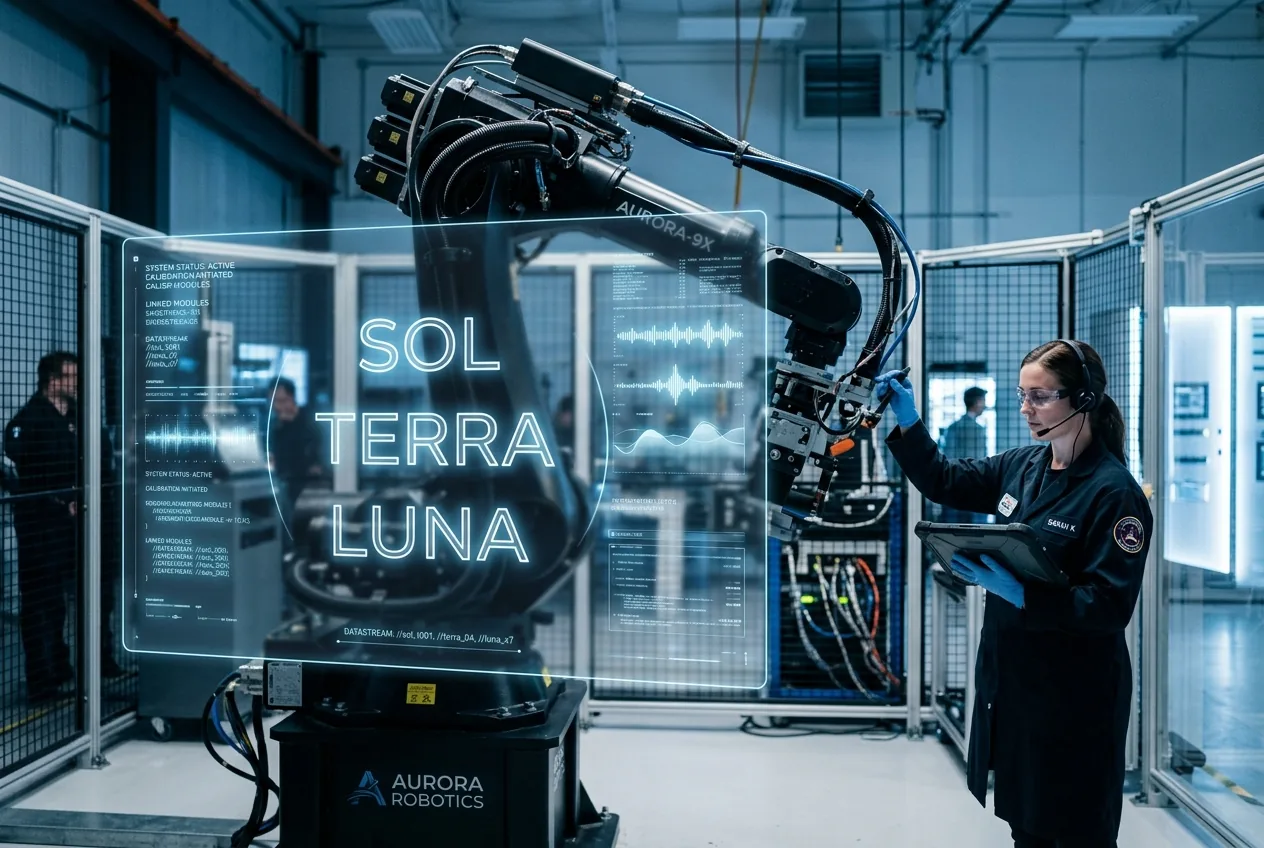
On July 9, 2026, the artificial intelligence landscape underwent a significant structural shift as OpenAI moved its GPT-5.6 model family from a restricted “trusted partner” preview to a full public release. The rollout, which includes the Sol, Terra, and Luna models, effectively concludes a two-week period of government-requested limitations that had sparked intense debate over the balance between national security and technological velocity. This release is not merely a quantitative update in parameters; it represents a qualitative pivot toward agentic capabilities that have profound implications for industrial automation, cybersecurity, and biological research.
The Technical Architecture of the 5.6 Suite
The GPT-5.6 family is tiered to address specific operational requirements, moving away from the "one-size-fits-all" approach of earlier generations. Sol, the flagship model, is positioned as the most robust engine for high-logic tasks. OpenAI has confirmed that Sol is significantly more capable in three specific domains: biological modeling, advanced cybersecurity defense, and complex coding. From a mechanical engineering perspective, the emphasis on biology and cybersecurity suggests a model designed to assist in the synthesis of new materials and the protection of critical industrial infrastructure from sophisticated digital threats.
Terra and Luna serve as the medium and lightweight counterparts, respectively. While Sol provides the heavy-duty inference required for research and development, Terra is optimized for enterprise-grade applications where cost-efficiency is paramount. Luna, the smallest of the trio, is designed for low-latency edge computing. This tiered approach is a pragmatic response to the skyrocketing costs of compute. As industrial firms begin to integrate AI into real-time robotics and assembly lines, the ability to select a model based on the specific latency and cost requirements of a task becomes an economic necessity rather than a luxury.
Agentic Efficiency: The 54% Breakthrough
Perhaps the most significant technical metric accompanying this release is the improvement in "agentic coding." According to OpenAI CEO Sam Altman, GPT-5.6 Sol is 54% more token-efficient on agentic coding tasks compared to its predecessors. In the context of industrial automation, "agentic" refers to the model's ability to not just suggest code, but to execute multi-step workflows, troubleshoot hardware-software interfaces, and manage complex system architectures with minimal human oversight.
For a mechanical engineer or a logistics manager, this efficiency gain is critical. Token efficiency translates directly to lower operational costs and faster response times for autonomous systems. If a robotic arm on a factory floor requires real-time recalibration based on visual input, a 54% increase in efficiency means the underlying AI can process the necessary commands with half the computational overhead. This move toward efficiency suggests that OpenAI is pivoting away from the era of brute-force scaling and toward a more refined, surgically precise application of intelligence in high-stakes environments.
The Regulatory Precedent: Compliance vs. Velocity
The two-week delay in the release of GPT-5.6 was a direct result of the Trump administration’s June executive order. This policy requires AI developers to share the results of safety tests with the government, specifically focusing on the models' ability to assist in the creation of biological weapons or the execution of large-scale cyberattacks. OpenAI’s leadership has been vocal about the friction this creates. While the company participated in the assessment, it maintained that long-term government holds could "keep the best tools from users, developers, enterprises, and cyber defenders.”
This friction highlights a growing divide in the tech sector. On one side, the government seeks to establish a repeatable process for federal evaluation, ensuring that models with "dual-use" capabilities do not fall into the hands of adversarial states. On the other side, firms like OpenAI and its rivals argue that the speed of innovation is itself a national security asset. By releasing GPT-5.6 immediately following the expiration of the requested hold, OpenAI is signaling its intent to push the boundaries of current regulatory frameworks while maintaining a veneer of cooperation.
Anthropic and the Geopolitical Backdrop
The timing of the GPT-5.6 release is inextricably linked to the actions of OpenAI’s primary competitor, Anthropic. Recently, Anthropic was forced to navigate its own clash with the U.S. government regarding export controls on its Claude Fable 5 and Mythos 5 models. Those models were briefly disabled to comply with Department of Commerce directives, only to have access restored once export licenses were clarified. This regulatory turbulence has become a standard feature of the high-end AI market.
Adding to the complexity are recent reports from Chinese security analysts claiming to have found vulnerabilities in Anthropic’s Claude models. While such claims are often viewed through a skeptical geopolitical lens, they underscore the high stakes of the GPT-5.6 release. If OpenAI can demonstrate that its models are not only more capable but also more resilient against adversarial probing, it may secure a dominant position in the global industrial market. The competition between OpenAI and Anthropic is no longer just about who has the better chatbot; it is about who can provide the most secure and reliable operating system for the next generation of global industry.
Conversational Interfacing: GPT-Live and Latency
Concurrent with the GPT-5.6 release, OpenAI rolled out GPT-Live, a new generation of voice models (GPT-Live-1 and GPT-Live-1 mini). Unlike previous iterations that relied on a sequence of transcribing voice to text, processing the text, and then converting it back to speech, GPT-Live processes audio natively. This allows the model to listen and speak simultaneously, mimicking the cadence and interruptibility of human conversation. While this has obvious consumer applications, its industrial utility is found in human-robot interaction (HRI).
In a warehouse or manufacturing setting, the ability for a technician to give complex, verbal instructions to a machine and receive an instantaneous, nuanced response is a significant step forward. Low-latency voice communication reduces the cognitive load on human operators and allows for more fluid coordination between biological and mechanical agents. By integrating this capability alongside the high-logic Sol model, OpenAI is attempting to bridge the gap between abstract intelligence and physical execution.
Economic Realities: The Falling Cost of Intelligence
As these models become more capable, the economic conversation is shifting toward the cost of deployment. Palo Alto Networks CEO Nikesh Arora recently noted that for AI to be truly integrated into the fabric of global business, the cost of tokens needs to fall by as much as 90%. The 54% efficiency gain reported for GPT-5.6 Sol is a move in that direction, but it also highlights the immense capital expenditures required to maintain these systems. The shift from general-purpose AI to specialized, efficient models like Terra and Luna suggests that the industry is entering a phase of "pragmatic AI," where ROI is measured by how much human labor a model can reliably augment or replace in a specific workflow.
Furthermore, the emergence of Meta in the AI coding market and the ongoing investments in companies like Anduril indicate that the ecosystem is diversifying. AI is no longer a localized phenomenon in Silicon Valley; it is becoming the central nervous system of the defense industry, the energy sector, and the global supply chain. The public release of GPT-5.6, free from its temporary federal shackles, marks the start of a period where these theoretical capabilities will be tested against the harsh realities of industrial application and economic viability.
Ultimately, the release of GPT-5.6 suggests that while government oversight is expanding, it is currently unable to keep pace with the release cycles of the private sector. The 14-day hold was a symbolic gesture of cooperation, but the rapid-fire launch of Sol, Terra, Luna, and GPT-Live demonstrates that the momentum of AI development is currently exceeding the speed of policy formation. For the industrial world, the tools have arrived; the challenge now lies in the integration.




Comments
No comments yet. Be the first!