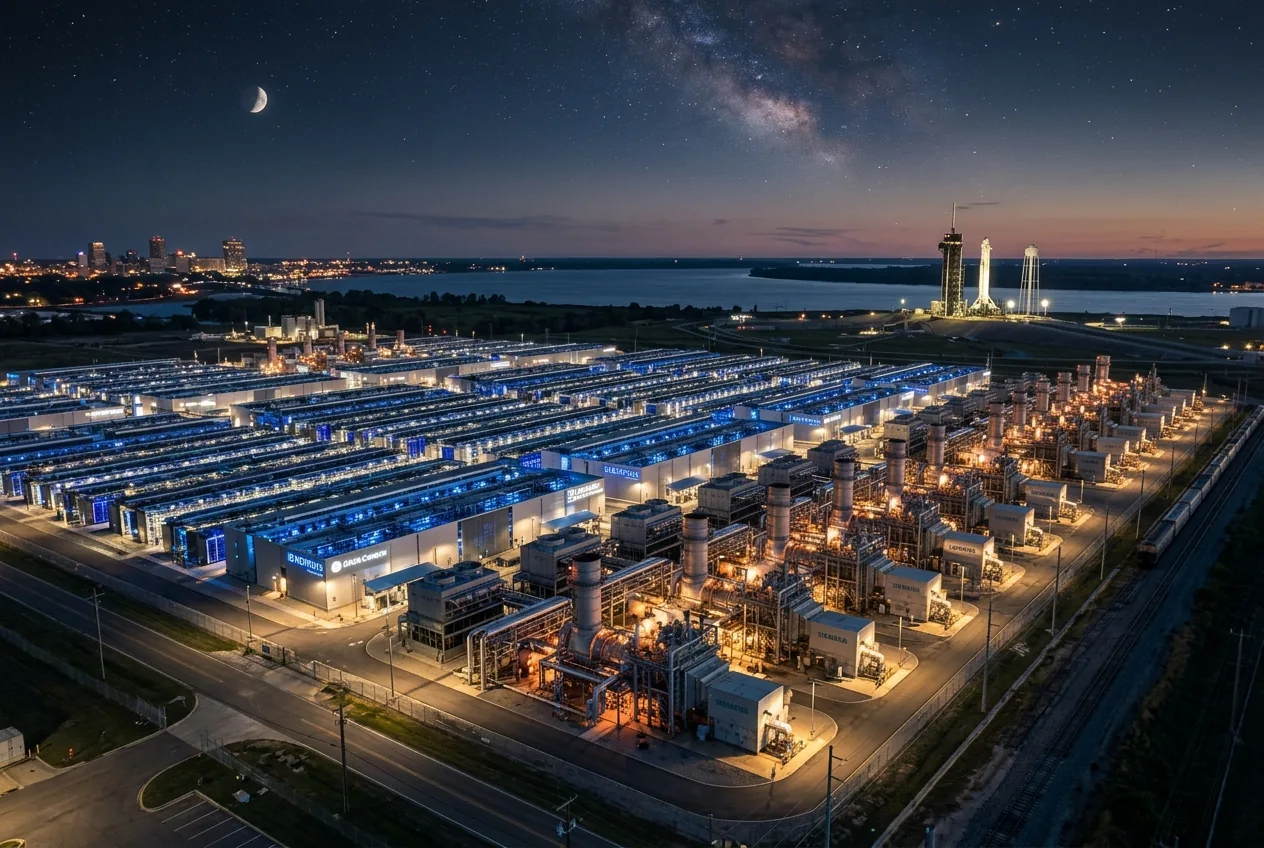
In a transaction that underscores the staggering capital requirements of the generative AI era, a recent SpaceX IPO filing has revealed that Anthropic is set to pay Elon Musk’s firm $1.25 billion per month for data center access. The deal, which spans three years, represents a $15 billion annual commitment to secure high-density compute capacity at the xAI supercluster in Memphis, Tennessee. This partnership effectively positions SpaceX and its xAI subsidiary as a primary infrastructure provider for one of its most direct competitors in the large language model market.
The disclosure, lodged with the U.S. Securities and Exchange Commission (SEC) ahead of SpaceX’s anticipated public listing, provides an unprecedented look at the financial and technical integration of Musk’s industrial empire. Earlier this year, SpaceX merged with xAI, the artificial intelligence startup responsible for the Grok chatbot. This merger, valued at approximately $1.25 trillion, was designed to leverage SpaceX’s engineering prowess and capital-raising ability to fund the massive infrastructure required for frontier AI development. The Anthropic deal serves as a critical revenue stream for a venture that is currently burning through billions in capital expenditures.
The economics of the $45 billion compute lease
Under the terms of the agreement, Anthropic—the creator of the Claude chatbot—will utilize 300 megawatts (MW) of data center space at the xAI facilities. The contract is scheduled to run until May 2029, though it includes a termination clause allowing either party to exit with 90 days' notice. For Anthropic, which recently raised $65 billion in Series H funding to reach a $965 billion valuation, the deal is a pragmatic necessity. As the demand for training and inference compute outstrips the supply of available Tier 4 data centers, AI labs are forced to secure capacity wherever it exists, even from rivals.
From a mechanical and industrial perspective, the lease highlights the shift of SpaceX from an aerospace and telecommunications firm into a diversified compute utility. The IPO document indicates that xAI is actively transitioning into a cloud service provider model, citing a separate agreement with the AI code-editing startup Cursor. By renting out its surplus GPUs (Graphics Processing Units), SpaceX is attempting to offset the massive losses sustained during the build-out of its Memphis cluster. The filing shows that xAI lost $2.4 billion in the first quarter of 2026 alone, driven by an infrastructure spend that is projected to hit $30 billion annually.
Engineering the Colossus cluster: Nameplate vs. actual power
The heart of the deal is the "Colossus" data center cluster located in a former Electrolux factory in Memphis. While Elon Musk has frequently characterized the site as a 1-gigawatt (GW) facility—claiming it to be the largest of its kind—the technical reality revealed in the IPO filing is more nuanced. The document uses the term "nameplate compute draw" to describe the 1GW figure, clarifying that this represents the theoretical maximum power consumption of all installed GPUs if they were running at peak load simultaneously.
Internal data suggests that while the nameplate capacity reached 1GW in March 2026, the actual useful compute power is currently lower. Satellite imagery and utility filings indicate that the site’s cooling infrastructure was initially scaled for approximately 350MW of heat dissipation. Currently, the IPO filing directly references only 330MW of active compute: 120MW at the original Colossus 1 facility and 210MW at Colossus 2. To bridge this gap and fulfill its obligations to Anthropic, SpaceX is planning a massive expansion of Colossus 2, which is expected to bring online an additional 220,000 GB300 processors and 400MW of incremental power capacity.
The methane turbine controversy and grid constraints
A significant hurdle for the Memphis cluster has been the inability of the local electrical grid to provide the instantaneous high-voltage power required for 100,000+ GPU clusters. To circumvent these constraints and accelerate deployment, xAI opted to install a fleet of 27 methane gas turbines to provide behind-the-meter power. This decision has sparked significant legal and environmental friction. The NAACP recently launched a lawsuit against xAI and its subsidiary, MZX Tech, alleging that the turbines were installed without the necessary air quality permits and operate in violation of the Clean Air Act, impacting the surrounding Boxtown district.
Despite these legal challenges, the IPO filing confirms that SpaceX is doubling down on on-site power generation. The company has secured deals to acquire new turbines worth $2.8 billion, including a $2 billion contract with an undisclosed vendor. For an industrial engineer, this move reflects a calculated risk: the cost of environmental litigation and potential fines is being weighed against the massive opportunity cost of delayed compute availability. In the hyper-competitive AI market, having a powered-up cluster six months ahead of the grid is worth more than the capital cost of the turbines themselves.
Why is Anthropic funding its rival?
The deal raises an obvious strategic question: Why would Anthropic, which is locked in a fierce battle with xAI for LLM supremacy, hand over $1.25 billion a month to Elon Musk? The answer lies in the physics of the AI scaling laws. As models grow in complexity, the efficiency of training depends heavily on the physical proximity and interconnect speed of the GPUs. The Colossus cluster utilizes Nvidia’s latest Blackwell architecture and high-bandwidth interconnects (InfiniBand/Ethernet), providing a density of compute that is currently rare in the commercial colocation market.
From Memphis to orbit: The 2028 roadmap
The most ambitious aspect of the SpaceX-xAI synergy described in the filing is the plan for orbital data centers. SpaceX has filed for permission to launch up to one million satellites dedicated to space-based AI compute, with a target deployment date as early as 2028. The rationale is to bypass terrestrial power and cooling limitations by leveraging constant solar energy and the vacuum of space for heat dissipation—though the latter presents significant engineering challenges.
Thermal management in a vacuum relies entirely on radiation rather than convection. The IPO filing notes that SpaceX plans to adapt the thermal control systems proven on the Starlink constellation, including advanced radiators, vapor chambers, and active cooling loops. By moving training and inference tasks to orbit, SpaceX aims to create a global, decentralized compute network that is immune to local grid failures and land-use restrictions. While competitors like Blue Origin are exploring similar concepts, SpaceX’s existing launch cadence and Starlink heritage give it a distinct advantage in the race to move the cloud into the exosphere.
Ultimately, the $1.25 billion-a-month agreement between Anthropic and SpaceX marks a turning point in the industrialization of artificial intelligence. It signals the end of the era when AI was a software-centric pursuit and the beginning of an era where success is dictated by the ability to manage massive electrical loads, deploy heavy industrial turbines, and perhaps, eventually, master the thermal dynamics of compute in low Earth orbit. For now, the focus remains on the ground in Memphis, where $15 billion a year is the price of admission to the frontier of machine intelligence.




Comments
No comments yet. Be the first!