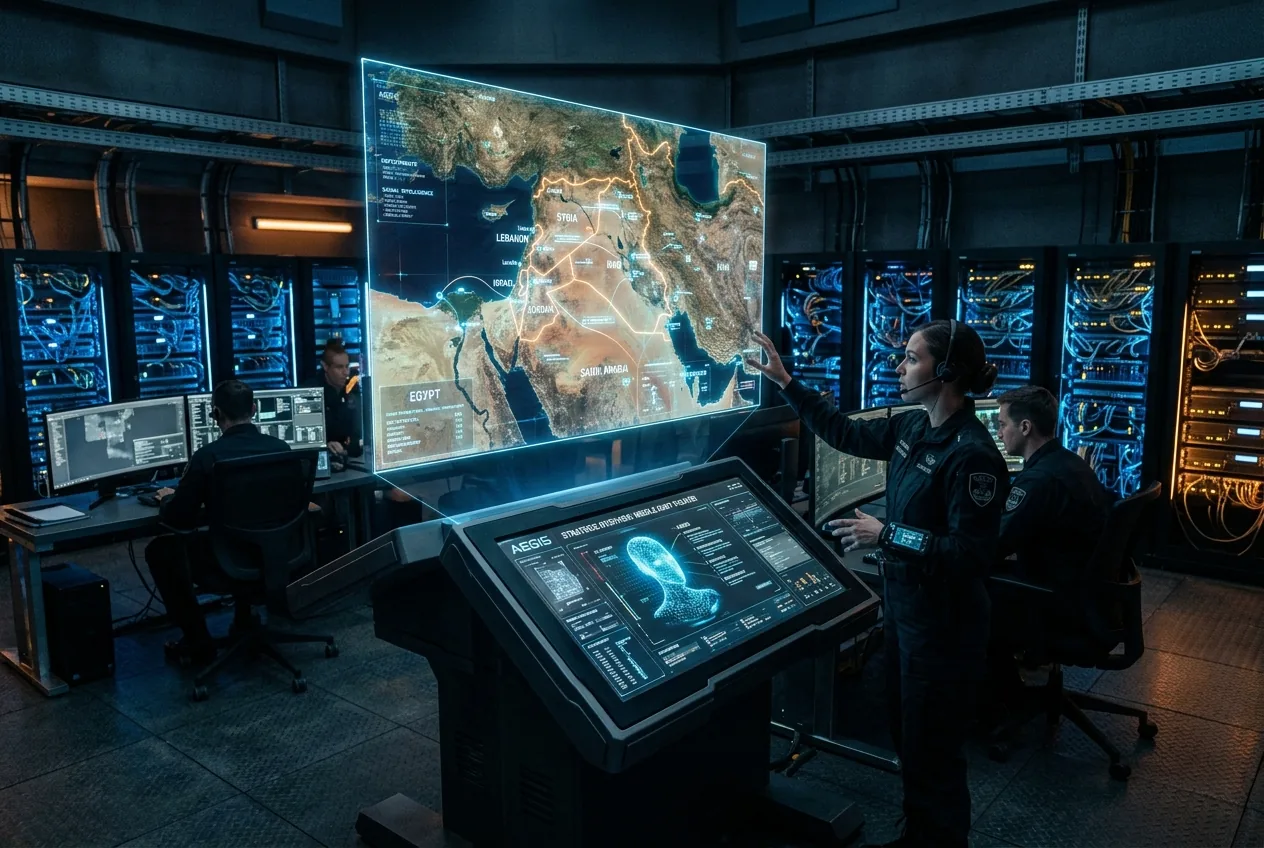
In a revelation that blurs the line between commercial software and lethal military hardware, a sworn statement from a high-ranking Pentagon official has linked Elon Musk’s Grok AI directly to a massive strike campaign in Iran. The disclosure did not come through a declassified intelligence report or a congressional hearing, but rather through a federal Clean Air Act lawsuit brought by the NAACP against Musk’s artificial intelligence venture, xAI. In the filing, the Department of Defense’s artificial intelligence chief, Cameron Stanley, asserted that the Grok system was instrumental in launching more than 2,000 munitions at 2,000 distinct targets over a mere four-day window.
The technical implications of this admission are profound. While the use of artificial intelligence in military targeting is not a new concept—Project Maven has been a staple of the Pentagon’s algorithmic warfare efforts for years—the integration of a Large Language Model (LLM) like Grok into the active "kill chain" represents a significant shift in operational tempo. The scale described—2,000 targets in 96 hours—averages out to a new target engagement every 2.8 minutes. This is a throughput that traditional human-driven intelligence cycles, which involve cross-referencing satellite imagery, signals intelligence (SIGINT), and human intelligence (HUMINT), have historically struggled to achieve without significant latency.
The NAACP Lawsuit and the National Security Defense
For a mechanical engineer or a robotics specialist, the infrastructure of war is as important as the munitions themselves. To facilitate 2,000 strikes in 96 hours, the system requires a robust data pipeline capable of ingesting terabytes of sensor data and outputting actionable coordinates. Stanley’s statement identifies Grok as one of only four AI models currently capable of supporting national security applications, and one of only three equipped to handle mission-critical operations while maintaining the necessary levels of confidentiality. This suggests that the Pentagon has moved beyond using AI for simple image recognition and is now using LLMs for complex data synthesis and decision-support roles.
How an LLM Facilitates Kinetic Warfare
What does it mean for a chatbot to "coordinate" a strike? To understand the mechanics, we must look at the bottleneck in modern warfare: information overload. A modern battlefield is saturated with data from MQ-9 Reaper drones, synthetic aperture radar (SAR) satellites, and intercepted communications. Traditionally, an intelligence officer would have to manually synthesize these disparate data streams into a targeting package. Grok, leveraging its transformer architecture, can process these unstructured data sets simultaneously, identifying patterns and anomalies that suggest military activity.
The Question of Reliability and Civilian Costs
The speed of Grok’s targeting has raised alarms regarding the accuracy of these strikes. Reports from early 2026, when the US-Iran conflict escalated, indicated a high number of civilian casualties. Specifically, a February bombing of the Shajareh Tayyebeh girls' school resulted in over 175 deaths. While the Pentagon has not confirmed which specific system was used for that strike, previous reporting by The Wall Street Journal suggested that Anthropic’s Claude model was also being utilized for target recommendations. The emergence of Grok as a primary tool in this ecosystem suggests a competitive environment where speed is prioritized over traditional vetting protocols.
From an engineering perspective, the risk of "hallucination" in LLMs—where the model confidently asserts a falsehood—is a critical failure mode. In a commercial setting, a hallucination might lead to a wrong fact in a research paper; in a kinetic setting, it leads to a "distinct target" that might actually be a civilian facility. The 1:1 ratio of munitions to targets mentioned in the filing suggests a high degree of confidence in precision, yet the sheer volume of targets engaged in such a short window implies that human-in-the-loop oversight may have been reduced to a mere rubber-stamp of the AI’s recommendations.
The Geopolitics of Data Center Power
The link between xAI’s data centers and the Iranian strike campaign highlights a new facet of the military-industrial complex: the weaponization of compute. Modern warfare is increasingly energy-intensive, not just in terms of jet fuel, but in terms of the gigawatts required to run the H100 GPU clusters that power Grok. The NAACP’s challenge to the environmental impact of these facilities is now pitted against a federal mandate for tactical superiority. This creates a precedent where the environmental and local regulations of a data center’s host city can be bypassed by invoking the Defense Production Act or similar national security waivers.
The technical specs of Grok’s involvement also suggest a deep level of integration with SpaceX’s Starlink and Starshield networks. For an AI model to provide real-time targeting support for 2,000 munitions, it requires a low-latency, high-bandwidth link between the processing hubs in the United States and the kinetic assets on the ground in the Middle East. This synergy between Musk’s various enterprises—xAI for the intelligence, SpaceX for the data transmission, and the Pentagon for the execution—represents a vertically integrated war machine that operates outside the traditional defense contractor framework inhabited by Boeing or Lockheed Martin.
The Shift Toward Automated Strategy
The disclosure regarding Grok is likely only the beginning of a broader transparency crisis in algorithmic warfare. If the Pentagon is willing to admit in a minor civil lawsuit that it is using commercial AI to manage thousands of targets, it suggests that the practice is already deeply normalized within the Department of Defense. The transition from "AI as a tool" to "AI as a commander's assistant" is complete. The focus now shifts to the economic and ethical viability of this model. Can the US maintain the massive power requirements for these AI systems during a sustained conflict? And more importantly, can the legal framework of war survive a reality where the decision to strike is made in milliseconds by an algorithm whose internal logic is often a "black box" even to its creators?




Comments
No comments yet. Be the first!