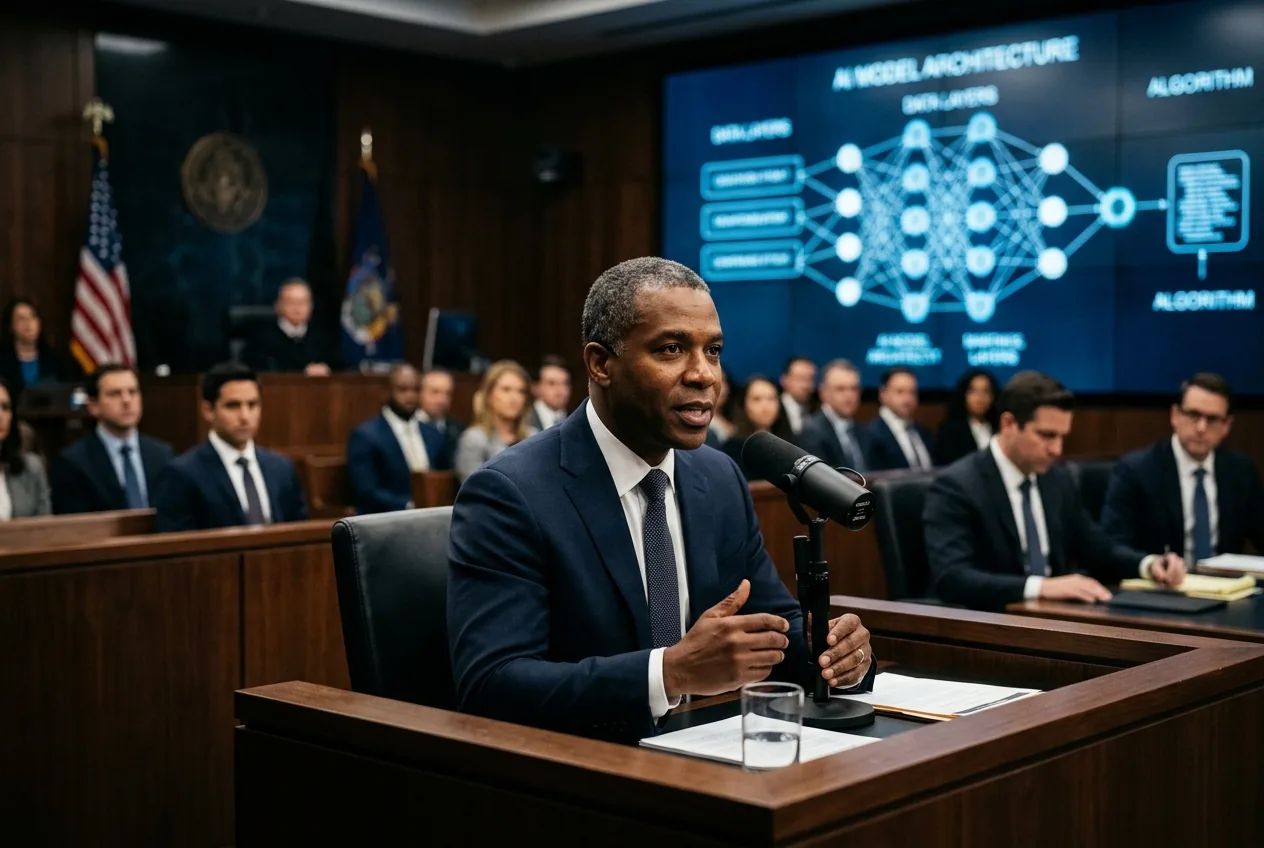
In a federal courtroom in Oakland, California, the intersection of high-stakes industrial strategy and complex personal dynamics was laid bare this week. Shivon Zilis, a high-ranking executive at Neuralink and a former board member at OpenAI, took the witness stand to provide testimony in the ongoing legal battle between Elon Musk and his former protégés, Sam Altman and Greg Brockman. While much of the public discourse has focused on the sensational nature of Zilis’s personal relationship with Musk—with whom she has fathered four children—the technical and economic revelations in her testimony provide a much more critical look at the shifting architecture of the artificial intelligence industry.
For those monitoring the industrial automation and robotics sectors, the testimony was less a soap opera and more a post-mortem on a failed corporate consolidation. Zilis, who served as a bridge between Musk and the OpenAI leadership from 2016 until 2023, detailed a period of intense volatility where the future of AGI (Artificial General Intelligence) was essentially a pawn in a larger game of hardware and compute dominance. Her testimony suggests that the current animosity between xAI, Tesla, and OpenAI is not merely a personality clash, but the result of a fundamental disagreement over how AI should be integrated into the global industrial infrastructure.
The Architecture of a Strategic Bridge
Shivon Zilis’s career trajectory is a case study in the concentrated power circles of Silicon Valley. Before becoming a central figure in Musk’s personal life, she was a respected technical mind at Bloomberg Beta and eventually an advisor to Tesla’s autopilot and chip design teams. When she joined the OpenAI board in 2016, she was positioned as the primary conduit for Musk’s influence within the organization. Her role was not merely administrative; she was tasked with ensuring that the non-profit’s goals remained aligned with Musk’s vision of AI safety and technical transparency.
During her testimony, Zilis described the early days of OpenAI as a "trust framework" that eventually began to fray. As the computational requirements for training large language models (LLMs) skyrocketed, the organization faced an existential crisis: how to fund the massive hardware acquisition necessary to stay competitive with Google and DeepMind. It was during this period that Zilis found herself navigating what she termed a "weird half-breakup" between Musk and the other co-founders. The friction was not just about money, but about the control of the underlying mechanical and software assets that would eventually power the next generation of robotics.
Zilis testified that her loyalty was always to the "best outcome for AI for humanity," yet she admitted that navigating the loyalties between Musk and Altman became increasingly difficult as their strategic paths diverged. As OpenAI moved toward a for-profit model to secure a partnership with Microsoft, Musk’s alternative was a complete absorption of the startup into his own industrial empire. This tension turned Zilis from a bridge into a witness to the internal collapse of the original OpenAI mission.
Why Musk Wanted OpenAI to Join Tesla
One of the most significant revelations from the trial was the confirmation of Musk’s specific proposal to fold OpenAI into Tesla. According to Zilis, Musk offered Sam Altman a seat on the Tesla board of directors as part of a deal to merge the two entities. From a mechanical engineering and industrial perspective, this move was highly logical, even if it was politically unpalatable for the OpenAI team. At the time, Tesla was already building a world-class compute infrastructure for its autonomous driving efforts, and the synergy between OpenAI’s linguistic models and Tesla’s real-world robotics data would have been unparalleled.
The rejection of the Tesla merger led directly to the founding of xAI. Zilis testified that the trust between the parties evaporated when it became clear that OpenAI was poaching talent from Tesla and vice versa. This talent war is not just about programmers; it is about the limited pool of engineers capable of optimizing the stack between hardware and high-level reasoning software. When Musk realized he could not own OpenAI, he pivoted to building a competitor from scratch, utilizing the data streams from his social media platform, X, and the industrial compute clusters he had already established.
The Human Variable in Industrial Conflict
While the technical specs and merger details are paramount, Zilis also addressed the personal dimension of her involvement with Musk. She clarified the timeline of their relationship, describing it as evolving from a professional advisory role to a platonic sperm donation and, eventually, to a romantic partnership. For an observer of corporate governance, this creates a fascinating, if problematic, case study. Zilis was a fiduciary of a non-profit while having a growing personal stake in the success of its most significant donor and eventual competitor.
Zilis denied that her relationship with Musk influenced her board decisions, asserting that she never acted as a "funnel" for information back to the billionaire. However, she did admit to messaging Musk that the "trust game is about to get tricky." While she later attempted to walk back the phrasing to "trust framework," the sentiment remains clear: the boundaries between personal loyalty and professional duty were virtually non-existent. This lack of clear separation is often a hallmark of high-growth tech sectors, but rarely does it involve the mother of a CEO's children sitting on the board of his primary rival.
The Economic Viability of the xAI Pivot
The testimony also touched upon the economic reality of the current AI arms race. Zilis noted that when the father of her children started a competitive effort, there was "nothing to be done." This pragmatic admission reflects the brutal nature of the industry: scale is the only metric that matters. By launching xAI, Musk essentially admitted that the collaborative model of the early 2010s was dead. The industry had moved into a phase of vertical integration, where the company that controls the data, the compute, and the physical robot wins.
xAI’s rapid development, including the deployment of the Colossus supercomputer cluster in Memphis, is an attempt to replicate what the Tesla-OpenAI merger would have achieved. However, the cost of this independence is staggering. Without the early-mover advantage of ChatGPT, xAI is forced to play a game of catch-up that requires billions in capital expenditure. Zilis’s presence in the courtroom as a witness for Musk, rather than a plaintiff as she once was, suggests a closing of ranks. She is no longer just a bridge to OpenAI; she is a cornerstone of the xAI and Tesla ecosystem.
The economic impact of this feud extends to the labor market. The testimony confirmed that Musk was actively poaching from OpenAI to fuel his new venture, a move that Altman discovered just as ChatGPT was beginning its global ascent. This cycle of talent acquisition and intellectual property disputes is a significant drag on the overall pace of AI development, as the brightest minds in the field are frequently sidelined by non-compete litigation and shifting corporate loyalties.
Will the Court Rule on Technical Philosophy?
As the trial continues, the industry is left to grapple with the implications of Zilis’s testimony. The myth of the "neutral" board member has been thoroughly dismantled. In its place is a reality where the development of the most transformative technology of our time is inextricably linked to the personal lives, egos, and industrial ambitions of a handful of individuals. For the engineers and manufacturers building the robots that this AI will eventually control, the Oakland courtroom is where the operating system for the future is being litigated.
The resolution of this case will likely set the precedent for how AI companies are governed in the future. If the court finds in favor of Musk, it could force a radical restructuring of OpenAI’s relationship with Microsoft. If it finds for Altman, it will signal that the transition from non-profit research to industrial powerhouse is a legally protected path. Regardless of the outcome, Shivon Zilis has ensured that the world understands just how thin the line is between the boardroom and the nursery in the race for the future of intelligence.



Comments
No comments yet. Be the first!