Persistent market speculation regularly surges across financial desks and aerospace forums: the prospect of Space Exploration Technologies Corp. finally filing an S-1 registration statement to orchestrate the largest initial public offering in industrial history. Rumors projecting capital raises scaling into the tens of billions reflect a broader, insatiable appetite among institutional and retail investors seeking pure-play exposure to the burgeoning orbital economy. Yet, beneath the headline-grabbing valuations and speculative balance sheets lies a stark engineering and financial reality. The industrial cadence required to develop, iterate, and mass-produce super-heavy launch vehicles does not naturally align with the quarterly fiscal discipline demanded by public equity markets.
The Astronomical Burn Rate of Hardware-Rich Iteration
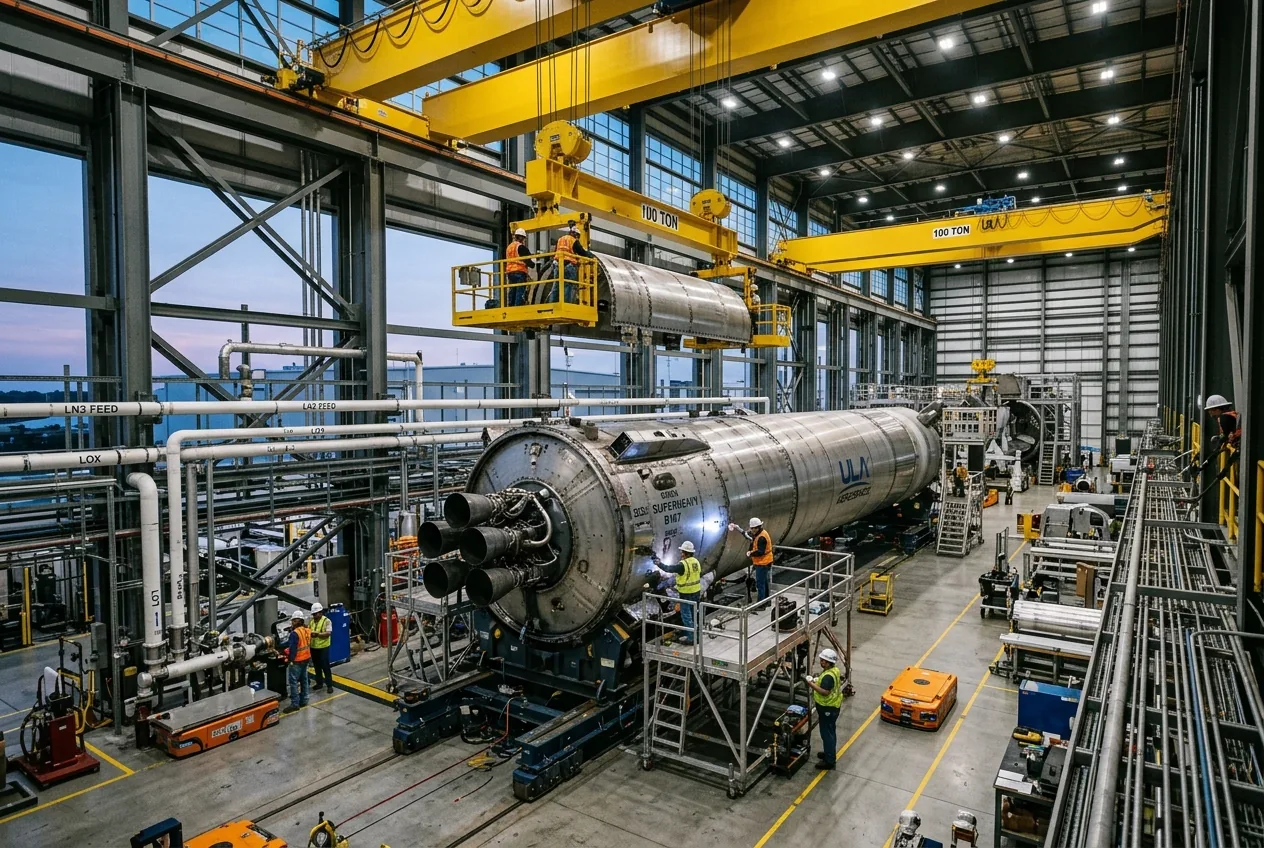
To comprehend why SpaceX resists traditional public market listings, one must inspect the physical assembly lines at Starbase in Boca Chica, Texas. Unlike traditional aerospace primes operating on cost-plus government procurement structures, SpaceX relies on an aggressive, capital-intensive design philosophy: build, test, fly, destroy, and iterate. The production rate of the Starship and Super Heavy stack demands continuous, non-dilutive reinvestment. Fabricating dozens of 9-meter-diameter rings out of specialized 300-series stainless steel alloys, maintaining multi-megawatt cryo-cooling sub-coolers, and tooling dedicated production bays requires persistent capital expenditure that generates zero near-term margin.
The propulsion logistics alone illustrate this industrial friction. The Raptor engine series, currently transitioning into its third generation, represents one of the most complex mechanical engineering endeavors in modern rocketry. Utilizing a full-flow staged combustion cycle, Raptor 3 operates at chamber pressures exceeding 350 bar, pushing metallurgical boundaries through internal 3D-printed regeneratively cooled channels and integrated hot-gas flow paths. Discarding dozens of these complex machines during suborbital and orbital test profiles would trigger alarm bells inside public earnings calls. In the private domain, these catastrophic test flights are accounted for as rapid data collection milestones; on public exchanges, they are often punished as inventory write-downs and unmanaged liability.
Bridging the gap between initial hardware architecture and a reliable, reusable transport system requires deep reserves. Rumors suggesting an offering designed to bankroll orbital propellant transfer, uncrewed lunar landing demonstrations, and surface infrastructure capture the magnitude of the engineering bill. The infrastructure required to liquefy, store, and pump thousands of tons of cryogenic liquid methane and liquid oxygen into orbital depots cannot be justified through the lens of a three-month financial reporting cycle. The engineering timeline operates on decade-long trajectories.
Starlink as an Industrial Money Machine
For years, financial analysts assumed that if any component of the Hawthorne-based firm were to make a public debut, it would be Starlink, the low-Earth-orbit broadband constellation. In its early deployments, Starlink operated as a formidable cash sink, burning capital across satellite fabrication, launch slots, and consumer terminal subsidies. The internal economics, however, have undergone a structural inversion. The transition from early v1.0 iterations to v2 Mini and full-scale v2 payloads has dramatically altered the unit economics of data transport per kilogram placed into orbit.
This operational pivot weakens the financial case for a spin-off or a dedicated public listing. When a business unit achieves positive operating cash flow, its urgency to access public equity markets diminishes significantly. Rather than spinning off Starlink to trade on public exchanges—subjecting its operational margins, spectrum licensing disputes, and launch dependencies to external shareholder scrutiny—SpaceX effectively utilizes Starlink’s subscriber cash flows to bankroll the Starship production lines. Segregating the two entities via an IPO would sever the direct pipeline feeding capital from communications infrastructure directly into interplanetary transport research.
The Private Liquidity Alternative
Wall Street often equates the absence of an initial public offering with an inability to access capital, but SpaceX has pioneered a secondary liquidity model that challenges the necessity of traditional stock listings. By establishing structured secondary tender offers at programmatic intervals—often twice a year—the company allows employees and early institutional backers to liquidate equity at predetermined, privately audited valuations. Recent secondary sales have pushed the company’s internal valuation well past the $200 billion threshold, proving that scale does not require an exchange ticker.
This closed-loop capital ecosystem confers distinct strategic advantages over public competitors:
- Sovereign wealth funds, prominent family offices, and elite venture syndicates routinely oversubscribe to these private rounds, providing an influx of flexible liquidity without dilution of operational control.
- The firm entirely avoids the onerous compliance burdens of the Sarbanes-Oxley Act, insulating its strategic leadership from hostile shareholder activism, short-selling campaigns, and litigation tied to operational delays.
- Proprietary hardware metrics, launch failure investigations, and unit manufacturing costs remain strictly guarded trade secrets rather than public disclosures filed with the Securities and Exchange Commission.
Institutional Contracts Provide Non-Dilutive Base Load
Beyond commercial revenue and private equity sales, SpaceX relies on a continuous baseline of federal funding that diminishes the need for public offerings. Through the National Security Space Launch program, the Space Development Agency’s proliferated warfighter architecture, and NASA’s Artemis program, the company acts as a vital utility for the United States government. The Human Landing System contract alone directs billions of dollars toward the development of Starship’s lunar variant, effectively underwriting substantial portions of the vehicle’s life support, landing software, and docking mechanism development.
Furthermore, the military utility of the Starshield platform—a specialized constellation providing secure communications, orbital reconnaissance, and domain awareness for defense entities—ensures a reliable, high-margin revenue stream that operates entirely decoupled from commercial market fluctuations. These classified and public institutional contracts act as a massive structural subsidy. The government covers development risk while SpaceX retains the dual-use intellectual property, perfecting mass-manufacturing techniques that are subsequently deployed across commercial Falcon 9 and Starship flights.
The synthesis of federal revenue, expanding commercial launch dominance, and Starlink’s global user base creates an unprecedented operational balance sheet. While market watchers will continue to hypothesize about a historic, record-breaking listing to finance orbital manufacturing hubs and Martian exploration, the physical assets at Starbase and McGregor tell a different story. The factory is running at full throttle, and it is doing so precisely because it is insulated from the very ticker symbols that so desperately wish to trade it.




Comments
No comments yet. Be the first!