The aerospace industry has long operated on a model of incrementalism, but the recent public offering of SpaceX has shattered those traditional paradigms. In a market event that observers are calling the most significant financial shift of the decade, the valuation of the Hawthorne-based manufacturer has surged past the trillion-dollar mark, simultaneously elevating its founder, Elon Musk, to the status of the world’s first trillionaire. For those of us focused on the mechanical engineering and industrial utility of space hardware, the IPO is more than a financial milestone; it is a validation of a specific, aggressive approach to vertical integration and rapid iterative design.
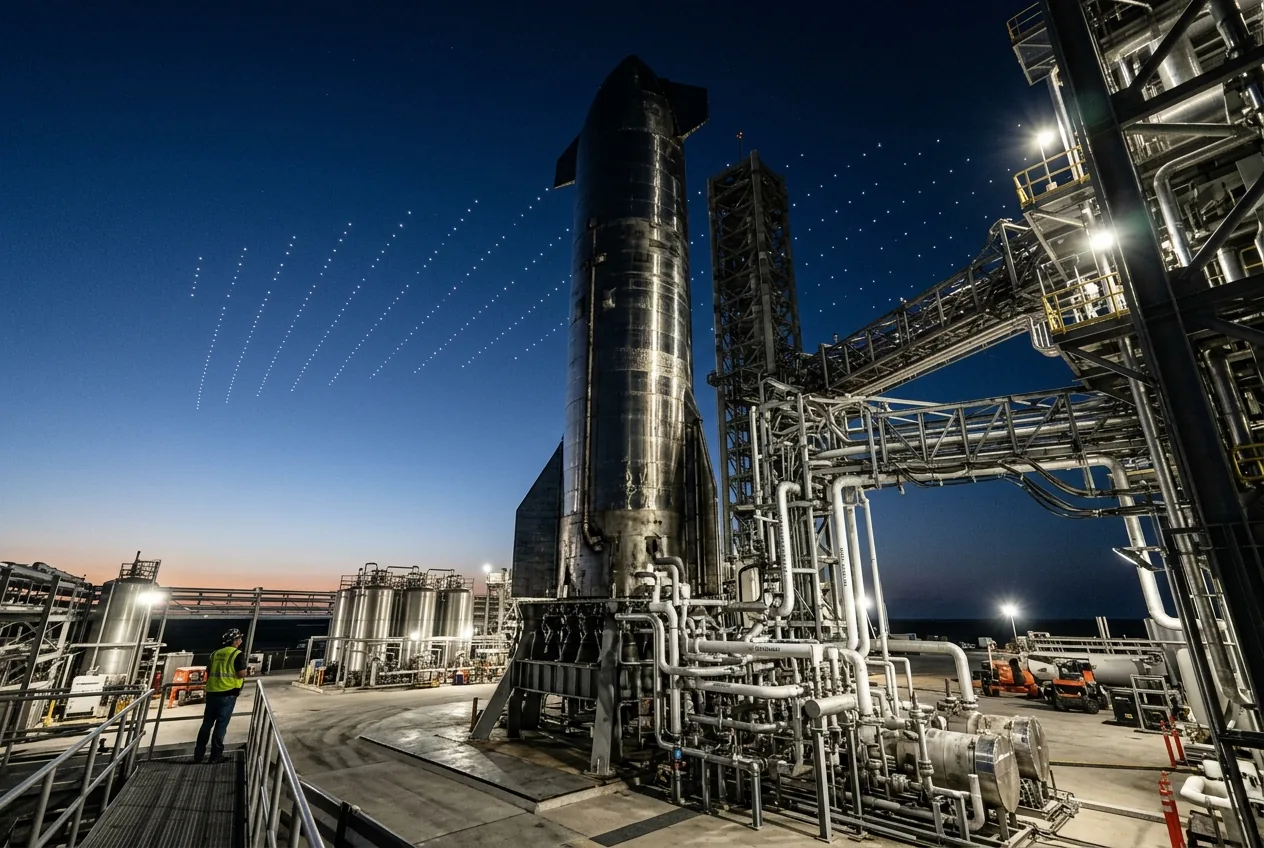
The transition from a privately held entity to a public record-breaker was not merely a result of market hype. To understand how SpaceX achieved a valuation that dwarfs legacy aerospace contractors, one must look at the underlying hardware. The success of the Starship program represents a fundamental shift in the cost-to-mass ratio for orbital delivery. By moving away from expendable launch vehicles and toward a fully reusable, stainless-steel architecture, SpaceX has effectively commoditized access to Low Earth Orbit (LEO). This technical capability is the engine driving the financial narrative.
The Economic Engine of Rapid Reusability
The primary driver of the SpaceX valuation is the projected manifest of the Starship launch system. Unlike the Falcon 9, which requires refurbishment of the first stage and the disposal of the second stage, Starship is designed for a cadence that mirrors commercial aviation. From an engineering standpoint, the challenges of heat shielding and methane-based propulsion (the Raptor engine) were significant hurdles. However, the resolution of these issues has allowed for a payload capacity exceeding 100 metric tons. This isn't just a bigger rocket; it is a different class of industrial tool.
When analyzing the fiscal health of the company, the Raptor engine's performance—specifically its thrust-to-weight ratio and its use of sub-cooled liquid methane and liquid oxygen—is a critical metric. Methane is easier to handle than hydrogen and produces less soot during combustion, which is essential for the rapid reuse of engines without extensive overhauls. This technical choice directly impacts the bottom line by reducing the turnaround time between launches and minimizing the labor-intensive inspection processes that plagued previous reusable systems like the Space Shuttle.
Furthermore, the scale of manufacturing at the Starbase facility in Texas demonstrates a move toward automotive-style mass production. Traditional aerospace manufacturing relies on bespoke, artisan-level assembly. SpaceX, conversely, has adopted a high-throughput methodology, utilizing advanced robotics and automated welding stations to churn out rocket segments. This industrial efficiency is what allows the company to absorb the costs of R&D while maintaining a dominant market share in the commercial launch sector.
Starlink and the Recurring Revenue Moat
While the rockets provide the transport, Starlink provides the cash flow. The satellite constellation has reached a level of density where global coverage is no longer a promise but a functional reality. For investors, the appeal of Starlink lies in its transition from a high-CAPEX infrastructure project to a high-margin service provider. The integration of the user terminal production—essentially a mass-produced phased-array antenna—has allowed SpaceX to lower the barrier to entry for millions of users in underserved regions.
The First Trillionaire and the Concentration of Industrial Power
The crowning of Elon Musk as a trillionaire is a mathematical inevitability of his equity stake in a company that now holds a near-monopoly on high-mass orbital transport. For the broader economy, this concentration of wealth and industrial capability raises significant questions about the future of infrastructure. When a single individual controls the primary means of reaching orbit—and by extension, the primary means of global satellite communication—the traditional checks and balances of the military-industrial complex are challenged.
From a pragmatic perspective, Musk’s wealth is largely tied to the illiquid assets of his companies. However, the IPO provides a mechanism for capital realization that could fund even more ambitious projects, such as the colonization of Mars or the expansion of terrestrial robotics via the Optimus program. The crossover between SpaceX’s autonomous systems and Tesla’s AI development suggests a future where robotic automation is the standard for both Earth-bound manufacturing and extraterrestrial construction.
Technical Risks and Market Volatility
Despite the record-shattering IPO, the path forward is not without significant technical and regulatory risks. The sheer scale of Starship operations requires a launch cadence that has never been attempted. Environmental regulations, FAA licensing, and the geopolitical implications of a private company dominating space traffic are all variables that could impact the stock's long-term performance. Any catastrophic failure during a high-profile mission could lead to a rapid devaluation, a reality that seasoned aerospace engineers know all too well.
Moreover, the competition is finally beginning to stir. While Blue Origin and various Chinese state-backed entities are years behind in terms of flight-proven reusability, the influx of capital into the sector following the SpaceX IPO will likely accelerate their development cycles. The question remains whether any other entity can achieve the same level of vertical integration. SpaceX’s internal production of everything from valves to flight software gives them a lead time that is difficult to disrupt with traditional subcontracting models.
A New Era for the Space Economy
As the first trillionaire, Musk now possesses the capital to act as his own sovereign entity in the realm of technological development. Whether this leads to a multi-planetary future or a more consolidated grip on terrestrial data and transport, the engineering achievements of SpaceX remain undeniable. The IPO has simply put a price tag on the ability to transcend the gravity well, and that price, it turns out, is higher than anyone previously imagined.




Comments
No comments yet. Be the first!