Whenever financial chatter turns to the prospect of SpaceX entering the public markets, trading desks and retail forums erupt with aggressive price targets and valuation models. Analysts across major brokerages and independent trading platforms consistently produce sprawling discounted cash flow projections, attempting to benchmark Elon Musk’s aerospace firm against a hybrid basket of defense primes, commercial telecommunications providers, and high-growth technology equities. Yet beneath the noise of theoretical market capitalizations that range anywhere from $180 billion to north of $250 billion, the underlying financial reality is dictated not by software-style software multiples, but by heavy industrial manufacturing, launch cadence metrics, and unit economics on the factory floor.
For institutional investors attempting to dissect SpaceX’s financial engine, the core tension lies between its operational cash-cow—the mature Falcon 9 architecture—and its two high-burn capital programs: the Starlink broadband megaconstellation and the Starship launch system. Evaluating these operations requires moving past standard corporate finance metrics and examining the mechanical and logistics systems that govern the company's throughput.
The Manufacturing Engine Behind Falcon 9 Reusability
The primary reason SpaceX dominates commercial launch economics is not merely that its first stages are reusable, but that the refurbishment cycle has transitioned from a custom artisan process to a standardized industrial maintenance workflow. In traditional aerospace manufacturing, cost structures are dominated by bespoke labor, manual inspections, and non-destructive testing regimes that extend turnaround times across months. SpaceX altered this paradigm by treating booster recovery as an extension of a high-rate assembly line.
Booster turnaround times, which once spanned months, have contracted toward weeks. The Falcon 9 booster turnaround record of under three weeks relies on automated ultrasonic inspection rigs, rapid-cycle propellant draining procedures, and the resilience of the Merlin 1D engine’s turbomachinery. Each Merlin 1D operates on a gas-generator cycle utilizing rocket-grade kerosene (RP-1) and liquid oxygen. While gas-generator engines deposit coking inside regenerative cooling channels, SpaceX’s metallurgical and thermal engineering teams developed automated flush-and-bake cycles that clear hydrocarbon residue without requiring engine removal from the thrust structure.
This operational efficiency fundamentally changes the gross margins of orbital transport. External customers pay upwards of $67 million per commercial Falcon 9 mission, while internal cost estimates for propellant, range fees, recovery fleet operations, and refurbishment place SpaceX’s marginal launch cost between $15 million and $28 million. That internal margin is what subsidizes the capital expenditures required to deploy Starlink satellites at a pace no competitor can match.
Starlink and the Industrialization of Satellite Hardware
Wall Street’s bullish valuation models routinely assign more than 70 percent of SpaceX’s potential enterprise value to Starlink. The logic is straightforward: the global commercial launch market has an addressable revenue cap in the low tens of billions of dollars, whereas global telecom and data connectivity represents a multitrillion-dollar market. However, realizing this revenue depends on high-volume consumer electronics and automated satellite fabrication rather than orbital rocketry alone.
In Redmond, Washington, SpaceX established what is functionally an automotive-style factory for satellites. Building Starlink v2 Mini satellites requires the integration of advanced phased-array antennas, krypton- and argon-fueled Hall-effect thrusters, and space-grade solar array drive mechanisms. Prior to SpaceX, the aerospace industry produced communications satellites in runs of single digits per year, with unit costs ranging between $100 million and $500 million. SpaceX’s production lines manufacture multiple Starlink spacecraft per day at estimated unit costs well below $300,000.
The economic leverage comes directly from this high-rate production environment. Automated surface-mount technology lines populate the custom silicon boards running the phased-array beamforming arrays, while automated friction-stir welding joins structural chassis components. If the production line slows down, or if supply chains for radiation-hardened microcontrollers choke, the launch manifest stalls and unit capital costs rise rapidly. Wall Street analysts projecting satellite broadband revenues must weight their models against these precision supply-chain constraints.
The Capital Sink of Starship and Boca Chica
While Falcon 9 generates operating cash and Starlink provides recurring subscription revenue, the Starship program at Boca Chica, Texas, functions as a massive consumer of capital. Developing a 120-meter-tall, fully reusable launch vehicle fabricated from austenitic stainless steel presents financial challenges that traditional public equity markets are notoriously ill-equipped to absorb on a quarterly basis.
The engineering challenge at Starbase centers on the Raptor 3 engine, a full-flow staged combustion cycle power unit burning liquid methane and liquid oxygen. Full-flow staged combustion is notoriously difficult to tame because it requires running oxygen-rich and fuel-rich preburners simultaneously, exposing turbine blades to extreme thermal and chemical oxidation environments. SpaceX has pursued aggressive design iterations, removing external sensors and flanges in favor of internal cooling channels and additive-manufactured manifolds to eliminate leak points and slash mass.
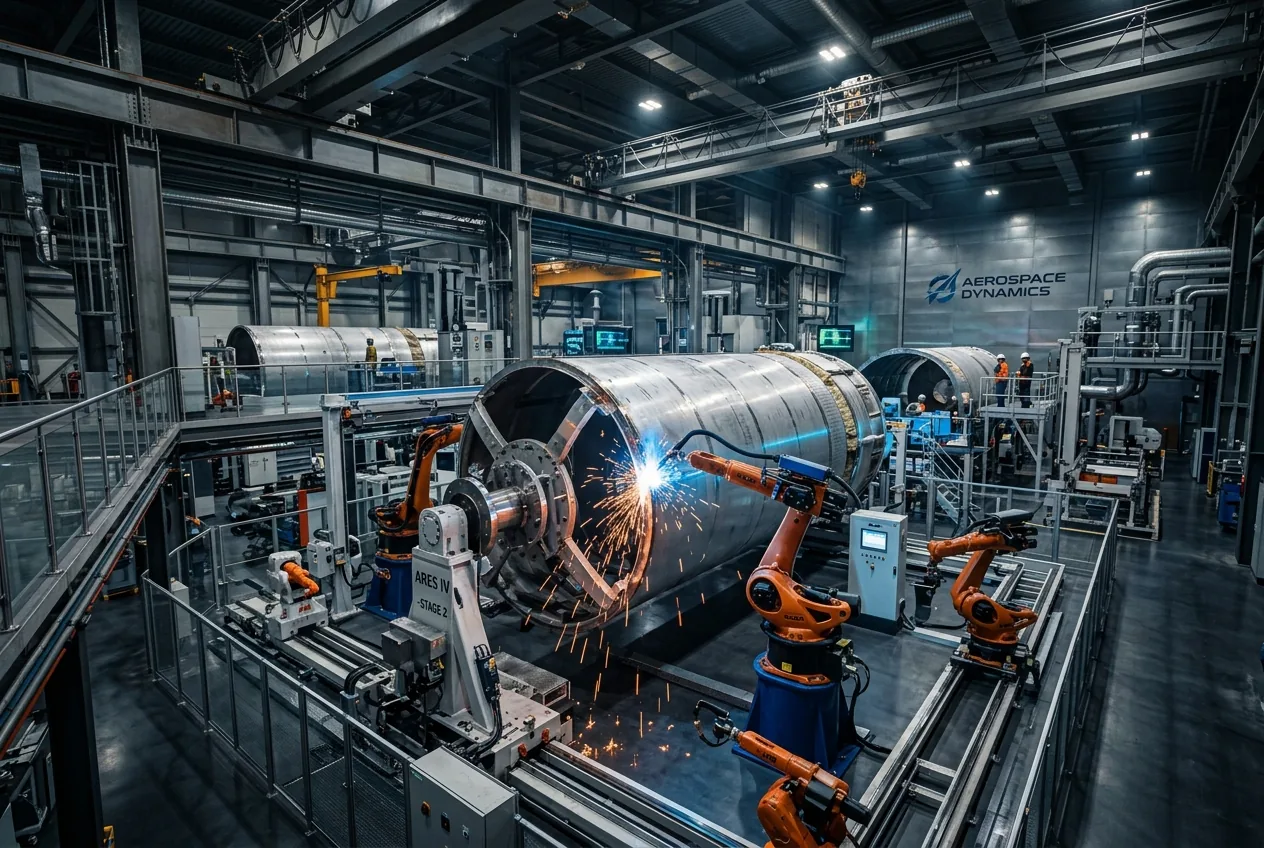
From a balance sheet perspective, Starship development represents hundreds of millions of dollars in continuous capital allocation for tooling, robotic welding gantries, cryogenic tank farms, and massive launch mount infrastructure. If Starship achieves operational cadence, it is projected to drive internal payload-to-orbit costs down by an order of magnitude—below $100 per kilogram. Until then, it remains a high-beta financial risk factor that requires substantial cash reserves to withstand static test failures, flight-test destructions, and regulatory redesign mandates.
Can Public Markets Tolerate SpaceX’s Operational Realities?
The persistent question hanging over every analyst call regarding a potential SpaceX public offering is whether public markets can stomach the operational volatility inherent in advanced hardware development. Public equity investors operate on predictable 90-day accounting cadences, penalizing margin compressions and demanding steady capital distributions. SpaceX, by contrast, operates on long-horizon, high-risk engineering iterations where capital is deliberately burned to accelerate technical discovery.
Elon Musk has frequently noted this tension, particularly regarding the capital-intensive deployment of Starlink constellations, which require continuous spacecraft replenishment every five years as low-Earth-orbit atmospheric drag degrades their orbital altitude. A publicly traded SpaceX would face intense scrutiny over satellite replacement capex, spectrum licensing battles, and launch pad insurance liabilities.
For market participants analyzing the company's valuation, the lesson is clear: balance sheet strength in aerospace cannot be separated from hardware durability. The metrics that truly determine SpaceX's financial trajectory are not found in forward price-to-earnings multiples, but in engine test-stand durations, automated assembly yields, and the operational turnaround times of its recovery vessels in Port Canaveral.




Comments
No comments yet. Be the first!