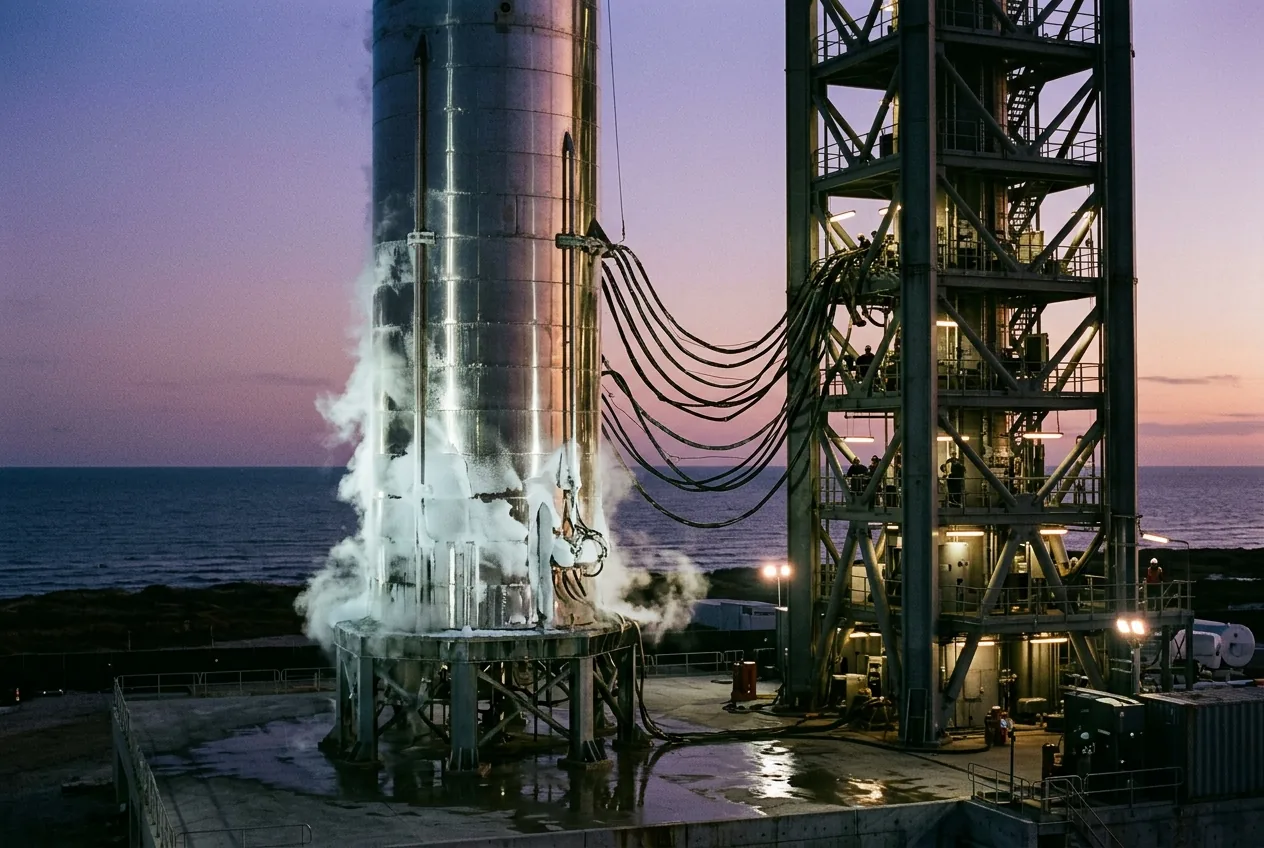
Financial forecasts projecting the arrival of the world’s first trillionaire have shifted from speculative science fiction to cold actuarial probability. Recent wealth models tracking the compound annual growth rates of Elon Musk’s portfolio—spearheaded by Informa Connect Academy and major investment banking desks—project that the serial entrepreneur will cross the thirteen-digit net worth threshold before the end of the decade. While public attention historically fixated on Tesla’s volatile market capitalization, the structural bedrock of this financial milestone lies inside the high-bay manufacturing facilities and launch pads of SpaceX, supported by the hyper-accelerated compute buildout of xAI.
Musk’s path to a trillion-dollar valuation is fundamentally an industrial story rather than a pure software arbitrage play. Unlike the platform monopolies of the early internet era that scaled on zero marginal software distribution costs, SpaceX’s balance sheet represents an unprecedented consolidation of physical infrastructure, launch frequency dominance, and satellite broadband deployment. For engineers and industrial economists, the trajectory toward a trillion-dollar personal fortune offers a case study in how deep hardware vertical integration, high-cadence automated manufacturing, and aggressive capital reinvestment can command unprecedented public and private market premiums.
The Reusable Rocket Paradigm as an Economic Flywheel
To understand the capitalization of SpaceX—which surpassed an internal valuation of $210 billion in private tender offers before eyeing potential public liquidity events—one must examine the physics of the Falcon 9 launch platform. Legacy aerospace operated on an expendable model where multi-million-dollar stages were discarded in the Atlantic after a single burn cycle, driving launch costs to upwards of $10,000 per kilogram to low Earth orbit (LEO). SpaceX dismantled this dynamic not merely by mastering propulsive vertical landing, but by re-engineering airframes, turbomachinery, and avionics to endure dozens of high-stress thermal cycles with minimal refurbishment overhead.
As commercial competitors struggle to bring expendable or partially reusable vehicles like Vulcan Centaur and Ariane 6 to sustained operational cadences, SpaceX has effectively captured more than 80 percent of the world’s commercial payload mass launched to orbit. In industrial economics, when an entity controls the logistical corridor to an entire operational theater, traditional price-to-earnings multiples give way to monopolistic infrastructure valuations.
Starlink and the Pivot from Logistics to Global Utility
The catalytic event for a formal public listing—or a carved-out initial public offering (IPO) of Starlink—revolves around recurring consumer and enterprise revenue. Launching rockets is fundamentally a transportation business, historically subjected to cyclical government budgets and constrained commercial satellite fleet refresh cycles. Starlink inverted this dynamic by transforming SpaceX into a vertically integrated telecommunications utility. The low-cost launch capability serves as an internal subsidizer for deploying thousands of low Earth orbit optical-mesh satellites, generating high-margin software-like recurring subscription revenue.
With operational satellites surpassing 6,000 units and active subscribers moving well past four million across commercial, maritime, aviation, and defense sectors, Starlink's annual revenue run rate has crossed the threshold from capital sink to positive free cash flow. In an IPO scenario, institutional markets price recurring telecommunications revenue vastly higher than industrial manufacturing operations. Analysts project that a standalone Starlink listing could unlock an enterprise valuation ranging from $200 billion to $400 billion on its own, providing the liquidity and market-clearing pricing needed to catapult Musk’s combined equity over historical thresholds.
The Starship Scale Factor
If Falcon 9 established commercial dominance, the fully reusable two-stage Starship architecture represents an attempt to alter the fundamental economics of human industry beyond the atmosphere. Fabricated from standard 304L stainless steel rather than high-cost carbon composites or aerospace-grade lithium-aluminum alloys, Starship is optimized for brute-force manufacturing throughput. The vehicle's methane-oxygen Raptor engines operate on an ultra-high-pressure staged combustion cycle, providing the thrust density required to loft over 100 metric tons fully reusable to orbit.
The economic implications of reducing the cost to orbit to double-digit dollar figures per kilogram are transformative. Starship is not merely a vehicle for theoretical Mars colonization; it is a bulk freight transport designed to deploy next-generation Starlink satellites at ten times the cadence, service deep-space Artemis contracts for NASA, and support space-based computational nodes. When transportation costs decrease by an order of magnitude, novel commercial operations become mathematically viable: point-to-point suborbital freight delivery, orbital data centers, and the return of manufactured materials produced in microgravity environments.
Convergence with xAI and Compute Infrastructure
The second pillar accelerating Musk’s trajectory toward a trillion-dollar valuation is the rapid scaling of xAI, founded to compete directly with algorithmic research giants like OpenAI, Google DeepMind, and Anthropic. In less than two years, xAI transitioned from an abstract concept to operating the Colossus cluster in Memphis, Tennessee, an industrial-scale compute facility packing 100,000 liquid-cooled Nvidia H100 and H200 GPUs. The logistical execution required to bring a high-voltage, high-megawatt computing cluster online in just 122 days was heavily enabled by borrowing the fast-paced hardware design and rapid-prototyping methodologies refined at Tesla and SpaceX.
The structural synergies across these entities are increasingly financial and operational. xAI requires vast volumes of real-world physical telemetry and real-time data to train frontier models, which are supplied through the real-world operational fleet of Tesla vehicles and the real-time social dynamics of X. In turn, high-level neural networks are vital for advancing Tesla’s Optimus humanoid robotics program and automating launch analytics, trajectory corrections, and satellite autonomous collision avoidance algorithms at SpaceX.
As institutional investors reallocate sovereign capital into AI compute platforms, xAI’s funding rounds have pushed its valuation into tens of billions of dollars within months of operational inception. The compounding equity across these interlinked enterprises creates a multi-layered asset base. Where traditional conglomerates historically suffered from an administrative overhead discount, Musk's corporate federation operates as an agile, cross-pollinating engineering apparatus that attracts massive risk capital.
Systemic Vulnerabilities in a Trillion-Dollar Matrix
Despite the mathematical feasibility of reaching a $1 trillion net worth, the concentration of such extensive industrial infrastructure in a single individual’s equity portfolio introduces acute systemic risks. The capital intensity of physical hardware ventures leaves them uniquely vulnerable to geopolitical shifts, regulatory interventions, and raw supply chain disruptions that do not impact pure-play software enterprises.
SpaceX relies heavily on a permissive regulatory environment from the Federal Aviation Administration (FAA), the Federal Communications Commission (FCC), and international orbital safety consortiums. Regulatory delays regarding environmental impact statements at Starbase or spectrum allocations for direct-to-cell systems can stall deployment timelines, burn cash reserves, and compress private multiples. Simultaneously, operating thousands of low-latency satellites in low Earth orbit exposes SpaceX to catastrophic orbital debris events, solar flare disruptions, and national security pushback from geopolitical adversaries like China and Russia, who view commercial mega-constellations as de facto military infrastructure.
Furthermore, Musk’s aggressive leadership style and public communications continuously generate regulatory friction across multiple jurisdictions. Antitrust scrutiny regarding whether SpaceX holds a predatory monopoly on domestic launch capabilities, or whether compute allocations between xAI and Tesla compromise fiduciary boundaries, poses a persistent legal drag. A sustained structural failure during an operational Starship flight or a sudden regulatory halt to constellation launches could trigger abrupt equity contractions across the entire industrial network.




Comments
No comments yet. Be the first!