In the high-stakes corridors of Silicon Valley and Washington, a fundamental transition is underway that has little to do with algorithmic breakthroughs and everything to do with balance sheets. Persistent reports across financial and technology channels indicate that OpenAI and competitor Anthropic are laying the groundwork for eventual initial public offerings, with market chatter pointing toward preliminary, confidential draft registration statements submitted under the watch of the U.S. Securities and Exchange Commission. While both organizations have historically downplayed public timelines, the trajectory of their capital expenditure leaves them few alternatives.
The Thermodynamic Math Behind the Capital Deficit
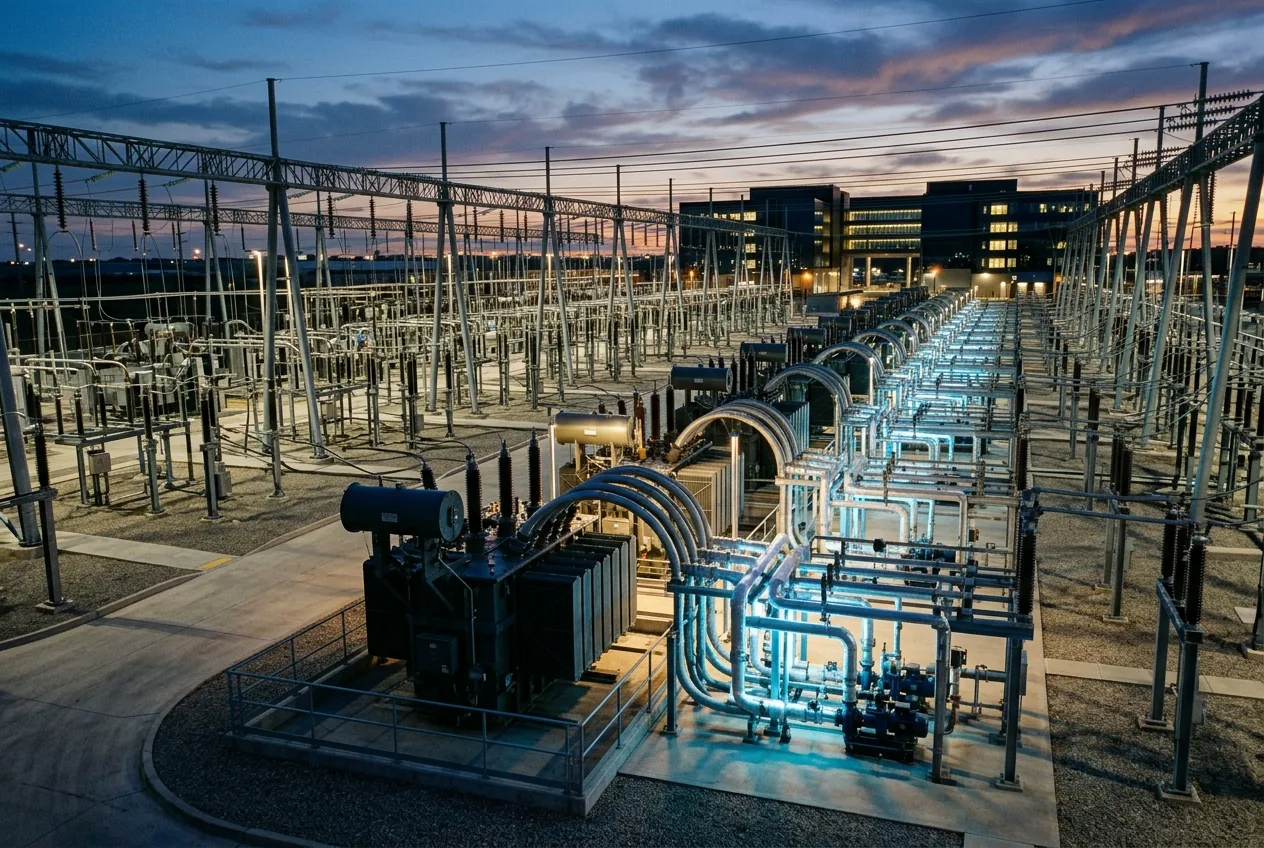
To understand why frontier artificial intelligence developers are gravitating toward institutional equity markets, one must look past the software interfaces and examine the mechanical and thermal realities of modern computing clusters. The frontier of large-scale foundation models has transitioned out of the phase where modest university-style compute clusters could make meaningful contributions. Today, competitive training runs are dictated by massive physical footprints that demand hundreds of megawatts of dedicated substation capacity, high-density liquid cooling loops, and hundreds of thousands of specialized accelerators interconnected across non-blocking optical switching fabrics.
The current hardware refresh cycle underscores this capital velocity. Deploying a single cluster of 100,000 Nvidia Blackwell-class GPUs carries a price tag that routinely eclipses four billion dollars when factoring in the specialized power delivery infrastructure, redundant chillers, high-bandwidth memory modules, and multi-tier InfiniBand or Ethernet networks required to prevent pipeline stalls. Furthermore, these silicon assets experience aggressive accounting depreciation schedules, often losing significant economic viability within three to four years as generational compute density doubles and architectural efficiencies render older silicon uncompetitive on a floating-point operations per watt basis.
Venture syndicates, sovereign wealth funds, and strategic tech partners have historically cushioned these expenditures through unprecedented multibillion-dollar financing tranches. Yet even the largest private funding rounds—such as OpenAI's historic multi-billion-dollar injections or Anthropic’s repeated infusions from hyperscalers—are consumed at staggering rates by day-to-day inferencing workloads and experimental pre-training checkpoints. As these firms sketch out five-year hardware roadmaps targeting gigawatt-scale data centers, the sheer volume of cash required to secure industrial switchgear, long-lead power purchase agreements, and advanced packaging allocation necessitates access to the deepest liquidity pools on the planet: public institutional equity.
The Untangling of Hybrid Corporate Architecture
Before any frontier lab can ring the opening bell at the New York Stock Exchange or Nasdaq, it must perform major surgery on its own corporate scaffolding. OpenAI’s genesis as a 501(c)(3) non-profit research collective with an eventual capped-profit commercial subsidiary was engineered for an era when the company operated as an academic sanctuary rather than a hyperscale industrial operator. Transitioning that structural framework into a standard, investor-aligned Delaware public benefit corporation has proven to be an intricate legal and governance challenge.
The SEC’s Division of Corporation Finance will demand clear answers to structural questions that private investors were willing to gloss over. Regulators will scrutinize the fiduciary responsibilities of the governing board, the ultimate distribution of equity to early non-profit stakeholders, and the exact mechanics governing how profit limits are extinguished. Moreover, the tangled web of commercial entanglements between the frontier labs and their cloud patrons will receive intense public auditing. OpenAI’s compute-credit and revenue-sharing agreements with Microsoft, alongside Anthropic’s multi-cloud arrangements with Amazon and Google, represent complex related-party transactions that must be laid bare in standard GAAP accounting terms.
Pressure from the Sovereign and Hyperscaler Front
For independent labs like OpenAI and Anthropic, competing against entities with perpetual operating cash flows or vertically integrated industrial empires requires establishing an independent, recurring currency: publicly traded common stock. With a public listing, these companies can execute institutional debt financing, issue convertible notes at scale, and use high-liquidity equity to acquire specialized hardware startups, networking developers, and niche automation firms. Without public equity, the labs remain fundamentally dependent on renegotiating compute-for-equity barter deals with the very hyperscalers who are simultaneously developing internal rival architectures.
Furthermore, the geopolitical dimension of frontier compute cannot be isolated from capital markets. Sovereign entities in the Middle East and East Asia are deploying national balance sheets to construct regional supercomputing hubs, driving up the global clearing price for raw compute components. For domestic American AI firms, achieving the sovereign scale required to build domestic, grid-independent infrastructure campuses means they must become pillars of broader institutional portfolios, attracting capital from pension funds, index managers, and global mutual funds that are legally prohibited from participating in private venture vehicles.
The Pivot from Benchmarks to Unit Economics
Once an S-1 emerges from confidential review into the public sphere, the fundamental performance indicators of the frontier labs will shift permanently. For the past four years, the primary currency of competitive superiority has been academic benchmarks: MMLU scoring, coding evaluations, and synthetic reasoning metrics. In the public market, those indices will be swiftly relegated behind the ruthless realities of unit economics, compute margins, and enterprise renewal rates.
Institutional analysts will dissect the actual gross margin profiles of enterprise API consumption versus consumer-facing subscription services. The physics of deployment reveal a persistent vulnerability: running low-latency inference across models utilizing hundreds of billions of parameters requires substantial continuous power and memory bandwidth. If the compute cost to generate an answer exceeds the fractional cents an enterprise customer is willing to pay for that utility, the underlying software margins quickly begin to look more like low-margin industrial manufacturing than high-margin cloud services.
The journey from confidential draft registrations to an active public listing will force a long-overdue reconciliation between theoretical capability and industrial productivity. For the hardware engineers who specify the chillers, the operations managers who procure substation transformers, and the enterprise clients deploying autonomous agents across their supply networks, this transition marks the true maturation of the field. The frontier of artificial intelligence is departing the sheltered environment of venture capital speculation and taking its place on the trading floor, where every watt of power and every floating-point calculation must ultimately justify its existence on an audited income statement.




Comments
No comments yet. Be the first!