The release of OpenAI’s GPT-5.6 marks a significant inflection point in the trajectory of generative artificial intelligence, not merely for its technical advancements but for the unprecedented regulatory landscape it now navigates. As the successor to the highly scrutinized GPT-4 and early iterations of the 5-series, GPT-5.6 represents a refined architectural shift designed to bridge the gap between high-latency reasoning and real-time industrial application. However, the rollout has been bifurcated. Under direct pressure from the current Trump administration’s tightened stance on dual-use technologies, OpenAI has implemented a tiered access system that restricts the model’s most potent features to a curated list of domestic entities and strategic allies. This move transforms the latest iteration of large language models (LLMs) from a global utility into a geopolitical asset, fundamentally altering the economics of the AI sector.
The Architecture of Incremental Efficiency
To understand the significance of GPT-5.6, one must look past the marketing nomenclature and examine the mechanical improvements in the model's underlying architecture. GPT-5.6 utilizes a sophisticated Mixture-of-Experts (MoE) framework that has been optimized for reduced floating-point operations per token without sacrificing the depth of its semantic understanding. This efficiency is critical for industrial robotics and supply chain automation, where high inference costs have historically prohibited the integration of LLMs into local edge computing environments. By shrinking the active parameter count during any given inference pass while maintaining a massive latent knowledge base, OpenAI has engineered a model that is significantly more responsive than its predecessors.
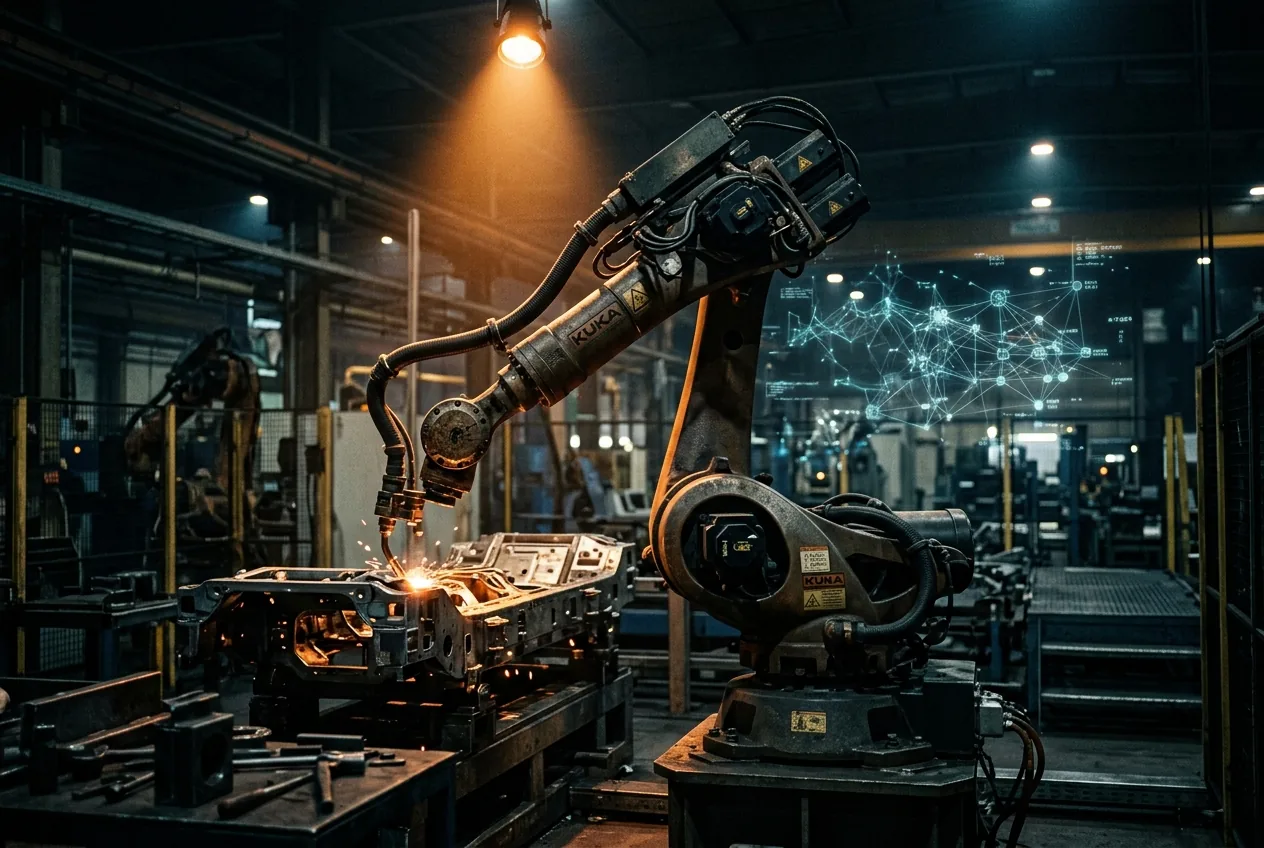
From an engineering perspective, the technical leap lies in the model's enhanced vision-language-action (VLA) capabilities. Previous models acted as secondary observers, processing data and providing text-based summaries. GPT-5.6 is designed for tighter integration with physical actuators and mechanical systems. In a laboratory or factory setting, this allows the model to interpret sensory data from robotic arms in real-time, adjusting for micro-variances in material density or environmental temperature. This level of precision is achieved through a new training objective that prioritizes causal reasoning over simple probabilistic completion. For the first time, we are seeing a model that can reliably simulate physical outcomes before issuing a command to a robotic controller, effectively functioning as a high-level operating system for automated hardware.
Furthermore, the 5.6 iteration introduces a native "system-level memory" that allows the model to retain context across massive datasets without the traditional performance degradation associated with long context windows. This is particularly vital for the aerospace and automotive industries, where engineering documentation can span thousands of pages of technical specifications and historical telemetry data. By utilizing a proprietary indexing system that functions similarly to a human’s long-term memory, GPT-5.6 can retrieve and synthesize information from vast repositories with a level of accuracy that approaches human expert performance. This technical milestone is what has attracted the intense scrutiny of federal regulators, as the model’s ability to optimize complex systems makes it a powerful tool for both civilian and defense applications.
The Trump Administration and the Compute Moat
For the American industrial sector, this restriction provides a temporary competitive advantage. Domestic manufacturing firms integrated with GPT-5.6 can optimize their supply chains and automate their quality control processes using tools that their international competitors simply cannot access. However, this policy also introduces a layer of complexity for multinational corporations. Firms with operations in both the United States and restricted zones are finding themselves in a difficult position, as they must navigate a patchwork of access permissions that threaten to silo their data and operations. The administration argues that these measures are necessary to ensure that the intellectual property generated by billions of dollars in American investment remains a domestic asset, but the long-term impact on global innovation remains a point of heated debate among economists.
The regulatory framework also mandates that OpenAI implement rigorous "know your customer" (KYC) protocols for any entity seeking access to the full-power version of GPT-5.6. This includes detailed disclosures regarding the intended use of the model and the hardware environments in which it will be deployed. For technical journalists and industry analysts, this suggests a shift toward a world where AI is not just software, but a controlled substance. The economic viability of this model hinges on the government's ability to police the digital borders of the internet—a task that is notoriously difficult given the ease with which data can be mirrored and tunneled through decentralized networks.
Industrial Automation and the Robotics Bridge
As a mechanical engineer, the most compelling aspect of GPT-5.6 is its potential to revolutionize the field of robotics. We are moving away from the era of "dumb" robots that follow pre-programmed paths and toward autonomous systems capable of genuine problem-solving. GPT-5.6 serves as the cognitive layer for these systems. When integrated with advanced sensors and high-torque actuators, the model can manage the complexities of unstructured environments—such as a warehouse after a spill or a construction site during a storm. The model’s ability to process multi-modal input means it can simultaneous listen for mechanical failures (acoustic monitoring), scan for structural cracks (visual inspection), and adjust its own operational parameters to compensate for wear and tear.
This capability has profound implications for the global supply chain. If a model like GPT-5.6 can be reliably deployed on-site, the need for human intervention in hazardous or repetitive tasks drops significantly. We are seeing early pilot programs where GPT-5.6 is used to manage entire fleets of autonomous mobile robots (AMRs) in logistics hubs. The model acts as a conductor, optimizing routes in real-time to avoid congestion and predicting maintenance needs before a failure occurs. This proactive approach to industrial management could lead to a double-digit percentage increase in operational efficiency, provided the hardware can keep up with the model's cognitive demands.
However, the hardware bottleneck remains a significant hurdle. While GPT-5.6 is more efficient than its predecessors, it still requires massive amounts of compute to function at its peak. The restricted rollout means that only entities with access to sanctioned NVIDIA Blackwell or H200 clusters can truly utilize the model’s most advanced features. This ties the future of AI software directly to the physical supply chain of silicon. For robotics startups outside of the approved zones, the lack of access to GPT-5.6 and the hardware required to run it could prove fatal, leading to a consolidation of the robotics industry around a few well-funded, domestic players.
Will the Restricted Access Model Stifle Innovation?
The economic viability of OpenAI itself is also at stake. Restricting the potential user base for its most advanced product limits its revenue streams. While government contracts and domestic partnerships are lucrative, they may not offset the loss of the global market in the long run. If OpenAI is forced to act as a quasi-governmental agency, its ability to innovate at the speed of a private tech company may be compromised. The balance between national security and commercial growth is delicate, and the GPT-5.6 rollout is the first real-world test of this new paradigm in the AI era.
The Road Ahead for GPT-5.6 and Beyond
Looking forward, the deployment of GPT-5.6 is likely just the beginning of a broader trend toward sovereign AI. We are entering an era where the performance of a model is inextricable from the political context of its creators. For the end-user—the mechanical engineer on the factory floor or the logistics manager at a shipping port—the primary concern remains the reliability and utility of the tool. If GPT-5.6 can deliver on its promise of real-time reasoning and mechanical integration, it will become the cornerstone of the next industrial revolution, regardless of the regulatory hurdles it must clear.
The technical community will be watching closely to see how the restricted version of the model performs compared to its less-regulated predecessors. Will the "safety" and "security" layers mandated by the government lead to a more brittle, less capable model? Or will the focused application of the model in high-stakes domestic industries lead to a level of refinement that wouldn't have been possible in a broader, more generalized release? These are the questions that will define the next decade of AI development. As the dust settles on this latest release, one thing is clear: the era of AI as an unfettered global commodity has come to an end. In its place is a new landscape where bits and bytes are guarded as closely as steel and oil, and where the smartest machine in the room is also the most heavily regulated.




Comments
No comments yet. Be the first!