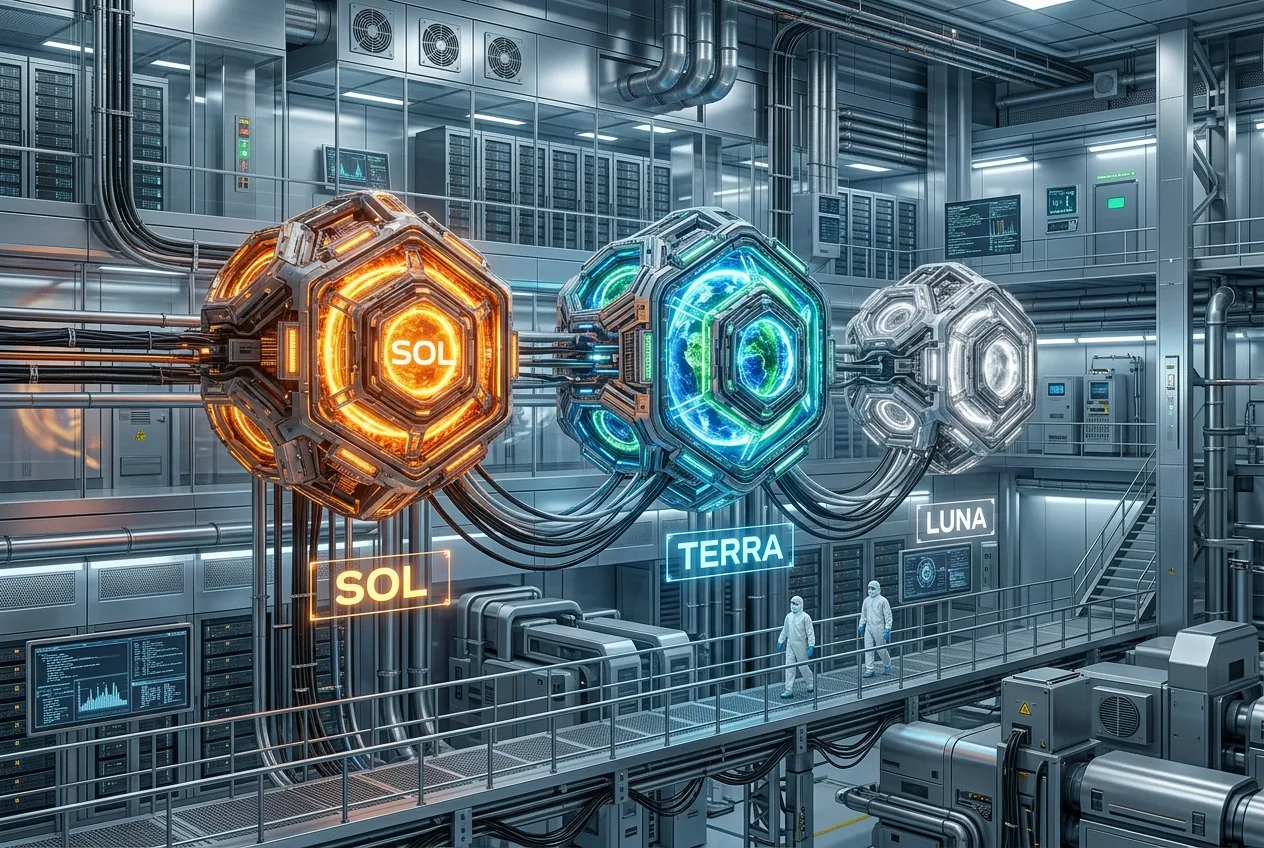
Following months of intense regulatory scrutiny and a shifting landscape in the generative AI market, OpenAI has officially launched GPT-5.6. This release is not a singular monolithic model, but rather a modular suite of three distinct engines: Sol, Terra, and Luna. Each model is engineered for a specific performance-to-cost ratio, signaling a shift away from the “bigger is better” philosophy of the early 2020s toward a more pragmatic, industrial approach to machine intelligence. By prioritizing token efficiency and reasoning density, OpenAI is positioning GPT-5.6 as the primary tool for enterprise-level automation and deep integration within the Microsoft 365 ecosystem.
The launch comes at a critical juncture. Competitors like Anthropic have gained significant ground with the Fable 5 series, which had previously set the benchmark for high-end reasoning and safety. However, OpenAI’s strategy with GPT-5.6 focuses on the “how” of deployment. For engineers and technical leads, the release provides a granular toolkit. Sol serves as the flagship “frontier” model for complex scientific and mathematical reasoning; Terra acts as the mid-tier workhorse for standard enterprise operations; and Luna is the low-latency, high-efficiency model designed for edge computing and rapid-fire interaction. This tiered deployment model suggests that OpenAI is no longer just selling a chatbot, but rather an industrial-grade intelligence utility.
From a technical standpoint, GPT-5.6 represents a significant leap in what OpenAI calls “intelligence per token.” In previous iterations, increasing the complexity of a task often required exponential increases in compute resources and context window management. With GPT-5.6, the underlying architecture has been optimized to produce more accurate, logically sound outputs with fewer tokens. This reduction in the “token tax” is what allows the model to undercut Anthropic’s Fable 5 on pricing while matching it on most standardized benchmarks, including the MMLU (Massive Multitask Language Understanding) and HumanEval for coding proficiency.
The engineering logic behind Sol, Terra, and Luna
The decision to brand these models under the names Sol, Terra, and Luna is more than a marketing gimmick; it reflects a structured hierarchy of industrial utility. Sol, the most powerful of the three, is designed for what engineers call “high-fidelity reasoning.” This is the model tasked with the “hardest work” OpenAI referenced in its initial release notes. In a manufacturing or supply chain context, Sol is the engine used for predictive logistics, multi-variable structural analysis, and autonomous research development. It operates at a higher latency than its siblings but possesses the depth required for tasks where a 0.1% error rate is unacceptable.
Terra represents the “balanced” tier, and it is likely where the bulk of enterprise volume will reside. In mechanical engineering terms, Terra is the equivalent of a mid-range PLC (Programmable Logic Controller)—it is robust, reliable, and cost-effective enough to run 24/7 operations without breaking the bank. It excels at summarizing large technical datasets, managing internal documentation, and serving as the backbone for standard API-driven customer service. By optimizing Terra for a specific “performance per dollar” metric, OpenAI is targeting the core of the B2B market, providing a model that can be deployed at scale without the prohibitive costs of a frontier-level engine.
Luna is the lightweight outlier, focusing on speed and minimal resource footprint. For developers building real-time robotics interfaces or mobile-first applications, Luna is the most relevant addition to the stack. It handles simple tasks with sub-millisecond response times, making it ideal for the “nearly-instant” interactions required in modern software. The differentiation of these three models indicates that the AI industry is entering a maturation phase, where hardware-software synergy and operational overhead are just as important as the raw size of the training set.
Microsoft 365 and the immediate enterprise rollout
The commercial impact of GPT-5.6 is felt most immediately through its deep integration into Microsoft 365 Copilot. Microsoft has confirmed that GPT-5.6 is now the preferred engine for its suite of productivity tools, including Word, Excel, and PowerPoint. This is not merely a cosmetic update; the integration allows for a higher level of functional automation. In Excel, for instance, the model can now perform autonomous data cleaning and complex statistical modeling based on natural language commands that were previously too nuanced for GPT-4 or early versions of GPT-5 to handle without hallucination.
For industrial users, this integration simplifies the bridge between raw data and actionable intelligence. A logistics manager can use the GPT-5.6-powered Copilot to analyze thousands of shipping manifests and generate an optimized schedule directly in Excel, utilizing the reasoning capabilities of the Terra model. In PowerPoint, the model can synthesize technical white papers into digestible visual presentations, maintaining the accuracy of the underlying engineering specifications. This level of utility is what makes GPT-5.6 a viable tool for the workforce rather than just an experimental curiosity.
Economic viability and the cost of intelligence
As a mechanical engineer, I look at AI models through the lens of efficiency and ROI. The real story of GPT-5.6 is the collapse of the cost-of-intelligence curve. When OpenAI first released its GPT-4 API, the cost was a significant barrier for startups and small-to-medium enterprises. With the GPT-5.6 suite, OpenAI is aggressively driving down the price of high-end inference. By matching the performance of Anthropic’s Fable 5 while undercutting it on cost, OpenAI is forcing a price war that ultimately benefits the end-user. This is a classic industrial play: commoditize the underlying technology to dominate the market share.
The economic utility of these models also extends to the physical world of robotics. As more companies look to integrate AI into their factory floors, the cost of the software “brain” becomes a line item just like the cost of a robotic arm or a conveyor system. If Terra can handle the logic for a sorting facility at half the cost of a competitor's model, the choice for a CTO becomes a simple calculation of throughput and overhead. OpenAI’s focus on “frontier intelligence that scales with ambition” is a direct appeal to this pragmatic calculation.
Will the modular approach redefine AI development?
The shift to a modular architecture like Sol, Terra, and Luna suggests that we have reached the limits of the “one-size-fits-all” AI model. In the same way that a car manufacturer offers different engines for a compact sedan, a heavy-duty truck, and a racing vehicle, AI developers are now tailoring their products to the specific demands of the task. This modularity allows for more precise resource allocation. It makes no sense to use a frontier-level model like Sol to draft a simple email, just as it makes no sense to use Luna to solve a complex multi-stage engineering problem. This specialization is a hallmark of an industry that is moving from the lab to the factory floor.
In the coming months, we should expect to see more benchmarks comparing the real-world efficiency of these models against human labor and previous-generation automation tools. As the intelligence density continues to increase, the focus will likely remain on the “performance per dollar” metric. For OpenAI, GPT-5.6 is the opening salvo in a new era of industrial intelligence, where the goal is not just to simulate human conversation, but to optimize the systems that keep the world running.




Comments
No comments yet. Be the first!