In a significant shift for the generative artificial intelligence landscape, OpenAI has officially transitioned its latest model family, GPT-5.6, to general availability. The announcement, confirmed on Thursday via international reporting, marks the end of a high-stakes delay initiated by the United States government over cybersecurity concerns. For industrial observers and mechanical engineers, the release represents more than just a software update; it is a fundamental realignment of how large language models (LLMs) interact with complex, multi-layered workflows in science, coding, and automated infrastructure.
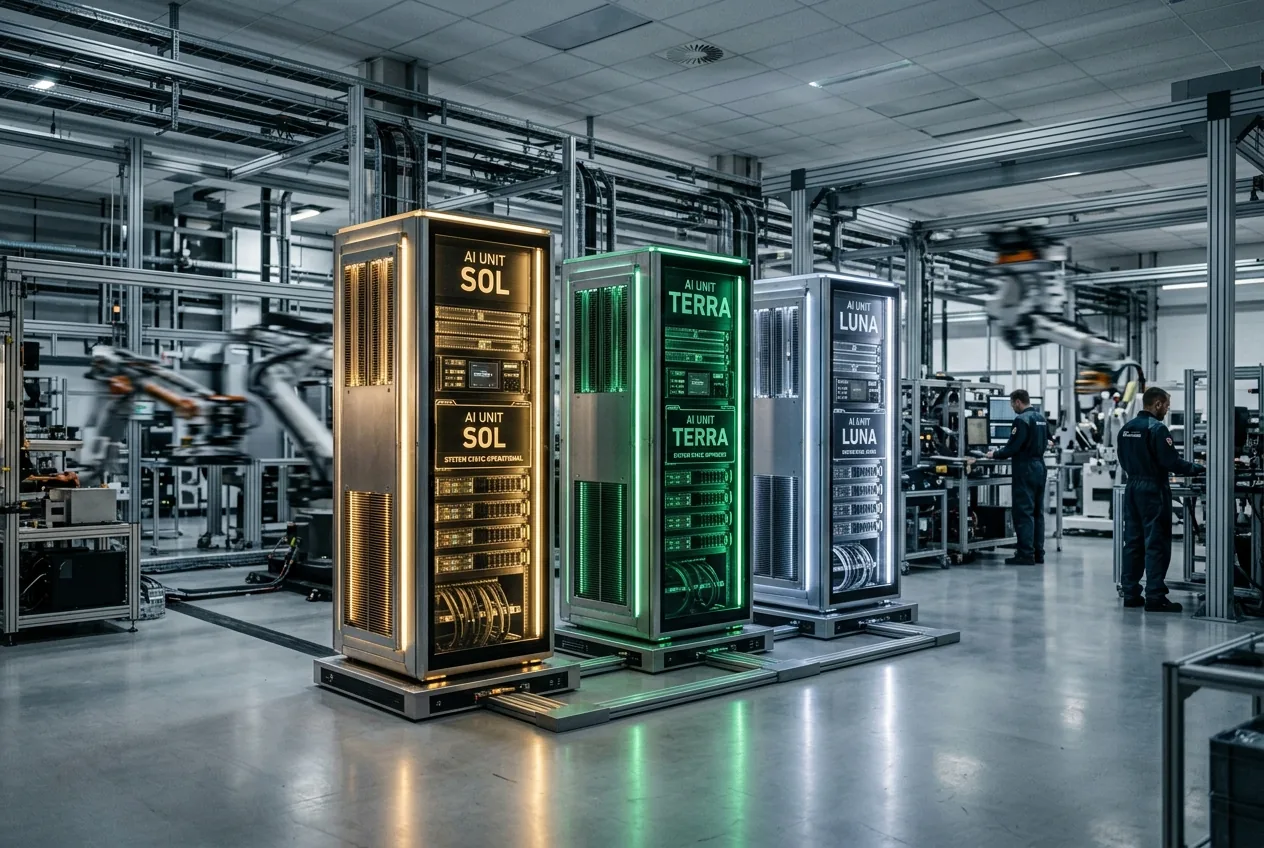
The GPT-5.6 family arrives with a tiered architecture—Sol, Terra, and Luna—designed to address the specific economic and computational requirements of different industrial sectors. Unlike previous iterations that focused primarily on broad linguistic fluency, this family introduces specialized reasoning modes and multi-agent coordination capabilities. The move signals a departure from the "one size fits all" approach, favoring a granular strategy that prioritizes token efficiency and reliability in high-stakes environments.
The Sol, Terra, and Luna Hierarchy
At the top of the hierarchy sits Sol, the flagship model intended to replace GPT-4o and early GPT-5 iterations as the primary engine for advanced research and development. According to OpenAI, Sol establishes a new baseline for intelligence in knowledge work and scientific discovery. From a technical perspective, the most notable advancement in Sol is its ability to operate with significantly fewer tokens than previous frontier models. In the context of industrial automation, token efficiency directly translates to lower latency in real-time control loops and reduced operational costs for firms integrating AI into their proprietary CAD and FEA (Finite Element Analysis) pipelines.
Terra serves as the middle-tier offering, positioned as a "balanced" model for day-to-day knowledge management and operational work. While Sol is the heavy lifter for complex problem solving, Terra is optimized for high-reliability consistency in standardized tasks. This middle ground is particularly relevant for supply chain logistics, where the model must synthesize vast quantities of shipping data, inventory logs, and market fluctuations without the overhead of a full-scale flagship architecture.
Completing the trio is Luna, the fastest and most cost-efficient entry in the 5.6 lineup. In the robotics sector, Luna’s profile is likely to be the most disruptive. For edge computing applications where a robotic arm or an autonomous mobile robot (AMR) requires immediate, low-latency instruction sets for pathfinding or object recognition, the cost-per-inference of Luna offers a pragmatic path to scaling AI across factory floors. By lowering the entry barrier for high-speed processing, OpenAI is making a clear play for the high-volume, low-margin sectors of the global manufacturing economy.
Max and Ultra: The Shift Toward Systematic Reasoning
Beyond the raw architecture of the models, the introduction of the "Max" and "Ultra" capability settings represents a pivotal evolution in how LLMs handle complexity. The Max setting allows the model extended time to reason, check, and revise its logic before producing an output. This "System 2" thinking—a term often used in cognitive psychology to describe slow, deliberate reasoning—is essential for engineering tasks where a hallucinated decimal point can result in catastrophic structural failure. In the Max mode, GPT-5.6 simulates a self-correction loop, evaluating its own hypotheses against the provided constraints before finalizing a solution.
The Ultra setting, however, is where the GPT-5.6 family bridges the gap between software and physical orchestration. Ultra mode enables the coordination of multiple agents in parallel. Rather than a single model attempting to solve a multifaceted problem in a linear fashion, the Ultra setting delegates sub-tasks to specialized sub-agents. For a mechanical engineer designing a complex assembly, this could mean one agent focuses on material stress constraints, another on cost-optimization of the supply chain, and a third on assembly-line compatibility, all synchronized by the GPT-5.6 core.
Why did the US government delay the rollout?
OpenAI has maintained that the models underwent their most extensive safety evaluations to date before being cleared for general availability. For industrial users, this rigorous vetting process is a double-edged sword. On one hand, it ensures a level of robustness and protection against prompt-injection attacks that could compromise industrial control systems. On the other, the government’s direct involvement in the rollout timeline introduces a layer of geopolitical risk for global firms relying on these models for critical infrastructure. The fact that the models are now generally available indicates that the safeguards—which OpenAI describes as their "most robust to date"—were sufficient to satisfy federal regulators, at least for the current versioning.
Economic Viability and the Token Economy
Furthermore, the availability of these models across ChatGPT, Codex, and the OpenAI API ensures that they can be integrated directly into existing IDEs (Integrated Development Environments) and PLC (Programmable Logic Controller) management software. This accessibility is key for the rapid prototyping of new mechanical systems, allowing engineers to move from concept to simulation with far less manual data entry and error-checking.
How will GPT-5.6 impact industrial robotics?
As an expert in the interface of robotics and human industry, the most compelling aspect of the GPT-5.6 launch is the potential for deeper integration with hardware. The parallel agent coordination in Ultra mode is a direct fit for the "Digital Twin" concept, where a digital replica of a physical system is used for testing and monitoring. GPT-5.6 could, in theory, manage the digital twin while simultaneously issuing commands to the physical robot, constantly comparing the two to detect deviations that indicate wear or malfunction.
The improved reasoning in the Sol model also addresses one of the persistent bottlenecks in robotic automation: the handling of edge cases. Standard robotics programs excel at repetitive tasks in structured environments but fail when faced with unexpected variables. A model with the deliberate reasoning capabilities of GPT-5.6 Max can process an anomaly—such as a misaligned component on a conveyor belt—and determine a corrective path based on physical principles rather than just pre-programmed instructions.
Ultimately, the GPT-5.6 model family represents a transition from AI as a conversational novelty to AI as a foundational industrial tool. The focus on token efficiency, tiered performance, and multi-agent reasoning aligns with the pragmatic requirements of modern engineering. While the cybersecurity delays serve as a reminder of the technology's inherent risks, the general availability of Sol, Terra, and Luna marks a new chapter in the automation of the global supply chain. For the engineers and manufacturers who have been waiting for AI to move beyond the screen and onto the factory floor, the arrival of GPT-5.6 is a calculated step toward that reality.




Comments
No comments yet. Be the first!