The landscape of Silicon Valley is shifting under the weight of a singular, massive ambition. OpenAI, the entity once founded as a non-profit research lab, is reportedly preparing for a public market debut that could see its valuation soar to a staggering $1 trillion. This move, while seemingly speculative to those outside the industry, represents a pragmatic response to the immense capital requirements of the next generation of generative models. For those of us focused on the mechanical and structural foundations of technology, this isn't just a financial headline; it is a signal that the cost of compute has reached a tipping point where traditional private funding can no longer sustain the pace of development.
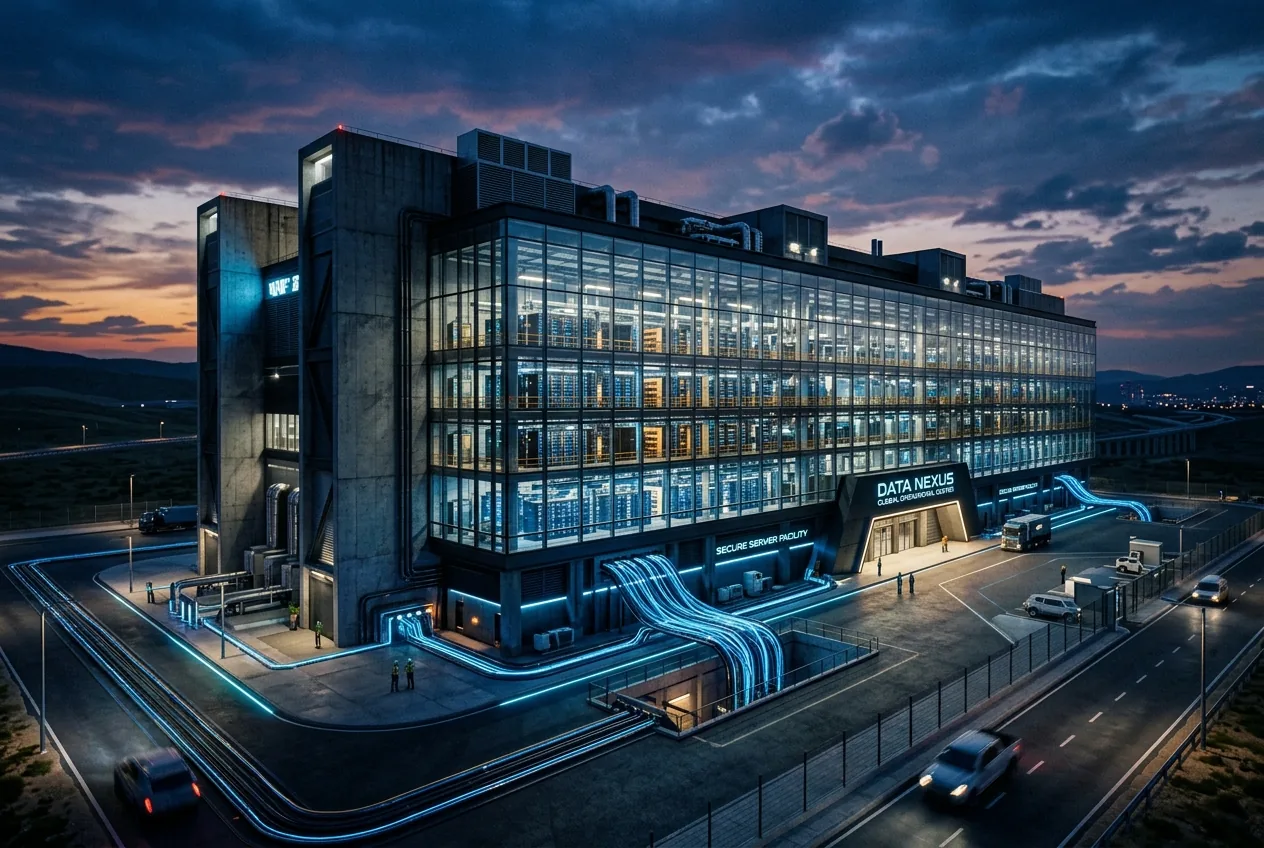
To understand why a company with fewer than 1,000 employees would seek a trillion-dollar valuation, one must look past the user interface of ChatGPT and into the physical architecture of the modern data center. The development of GPT-5 and its successors is no longer a purely mathematical endeavor. It is an industrial-scale engineering challenge that requires millions of specialized chips, massive electrical grid upgrades, and a supply chain capable of delivering high-bandwidth memory at a scale that the world has never seen. The IPO represents the transition of OpenAI from a software startup into a massive infrastructure play.
The Physical Constraints of Scaling Intelligence
At the heart of OpenAI’s capital hunger is the fundamental physics of the Large Language Model. As we move from the H100 era of NVIDIA chips into the Blackwell architecture, the power density of server racks is increasing exponentially. A single Blackwell-based rack can consume upwards of 120 kilowatts. When you scale that to a cluster capable of training a frontier model, the thermal management and power distribution requirements are more akin to heavy industrial manufacturing than a typical office park. OpenAI is essentially building a new kind of factory—one that processes electricity and data into digital intelligence.
The reported $1 trillion figure reflects the projected costs of the "Stargate" supercomputer project, a joint venture with Microsoft. This facility, aimed at hosting millions of AI chips, will require a level of liquid cooling and electrical substation support that currently exceeds the capacity of many mid-sized American cities. By filing for an IPO, OpenAI is positioning itself to bypass the limitations of venture capital. They are looking to tap into the deep liquidity of the public markets to finance the physical hardware that will define the next decade of the cognitive economy.
From a mechanical engineering perspective, the efficiency of these data centers is becoming the primary competitive advantage. It is no longer just about who has the best transformer architecture; it is about who can manage the thermal dissipation of a million GPUs without bankrupting the firm on energy costs. OpenAI’s shift toward a massive public listing suggests they are ready to treat compute as a commodity, much like oil or steel, requiring massive upfront infrastructure investment to ensure long-term output.
The Economic Viability of the Capped-Profit Model
One of the most significant hurdles in this IPO path is the complexity of OpenAI’s corporate structure. Currently operating under a capped-profit model, the organization must convince public investors that there is a clear path to returns that justifies such a gargantuan valuation. Skeptics point out that while the revenue growth of ChatGPT and enterprise API services has been impressive, the burn rate remains equally historic. The cost of inference—the process of the model actually answering a query—remains high, even as hardware becomes more efficient.
For an IPO of this magnitude to succeed, OpenAI must demonstrate that it can transition from a research-intensive firm into an industrial powerhouse. This involves not only software development but also the potential for vertical integration. There have been consistent rumors of Sam Altman’s interest in custom silicon. By designing their own ASICs (Application-Specific Integrated Circuits), OpenAI could theoretically optimize their software-hardware stack, reducing the reliance on NVIDIA’s high margins. However, the capital expenditure required to enter the semiconductor fabrication race is measured in the hundreds of billions, further justifying the need for a trillion-dollar public entry.
Public investors will also be looking for a diversified revenue stream that moves beyond simple chat subscriptions. The real economic utility of AI lies in its integration with robotics and industrial automation. If OpenAI can successfully deploy its models as the "brains" for humanoid robots or autonomous logistics systems, the addressable market expands from the digital world into the trillion-dollar physical labor market. This is where the engineering background of the leadership will be tested—can they bridge the gap between a neural network and a robotic actuator in a way that is reliable enough for a factory floor?
Geopolitical Tensions and the Compute Arms Race
The timing of this IPO filing cannot be decoupled from the global race for AI supremacy. Governments are now viewing compute capacity as a matter of national security. A public OpenAI would become a flagship of American technological soft power, but it also invites unprecedented regulatory scrutiny. The transition to a public entity means disclosing the intricacies of their supply chain dependencies, particularly their reliance on TSMC in Taiwan and the logistical bottlenecks of the CoWoS (Chip on Wafer on Substrate) packaging process.
As competitors like Anthropic and Google continue to dump billions into their own proprietary models, the "first to list" advantage could be decisive. A successful trillion-dollar IPO would provide OpenAI with a "war chest" that rivals the cash reserves of Apple or Alphabet. This capital is not just for hiring researchers; it is for securing long-term contracts for energy and silicon that will effectively lock out smaller competitors. In the world of industrial-scale AI, size provides its own form of gravity, attracting more data, more talent, and more hardware.
However, the risks are equally massive. If the public markets sour on the promise of AGI, or if the scaling laws that have guided GPT’s development hit a plateau, the fallout of a trillion-dollar correction would be systemic. We are witnessing a high-stakes bet on the trajectory of technological progress. For those of us who track the mechanical realities of the industry, the question isn't just about the stock price—it's about whether the physical infrastructure can actually deliver on the promises made to the shareholders.
The Road to AGI and Industrial Integration
Ultimately, OpenAI’s pursuit of a public listing marks the end of the "garage startup" era for Artificial Intelligence. We are entering the era of the "Compute Utility." Just as the electrical companies of the 20th century required massive public investment to build the grids that powered the industrial revolution, AI firms now require a similar scale of capital to build the cognitive grid of the 21st century.
For the robotics and automation sectors, this IPO is a double-edged sword. On one hand, it ensures that the massive compute power needed to solve complex physical interaction problems will be funded. On the other, it consolidates the power of foundational models into the hands of a few public entities driven by quarterly earnings. The focus will inevitably shift from pure research toward immediate industrial utility—models that can optimize supply chains, manage autonomous fleets, and oversee the complex thermodynamics of modern manufacturing.
As the filing proceeds, we will get our first real look at the balance sheet of the future. We will see exactly how much it costs to train the world's most advanced models and what the margins look like when you're selling intelligence at scale. For the pragmatists in the audience, this is the data we've been waiting for. It’s the moment when the hype of AI meets the cold, hard reality of the global market.




Comments
No comments yet. Be the first!