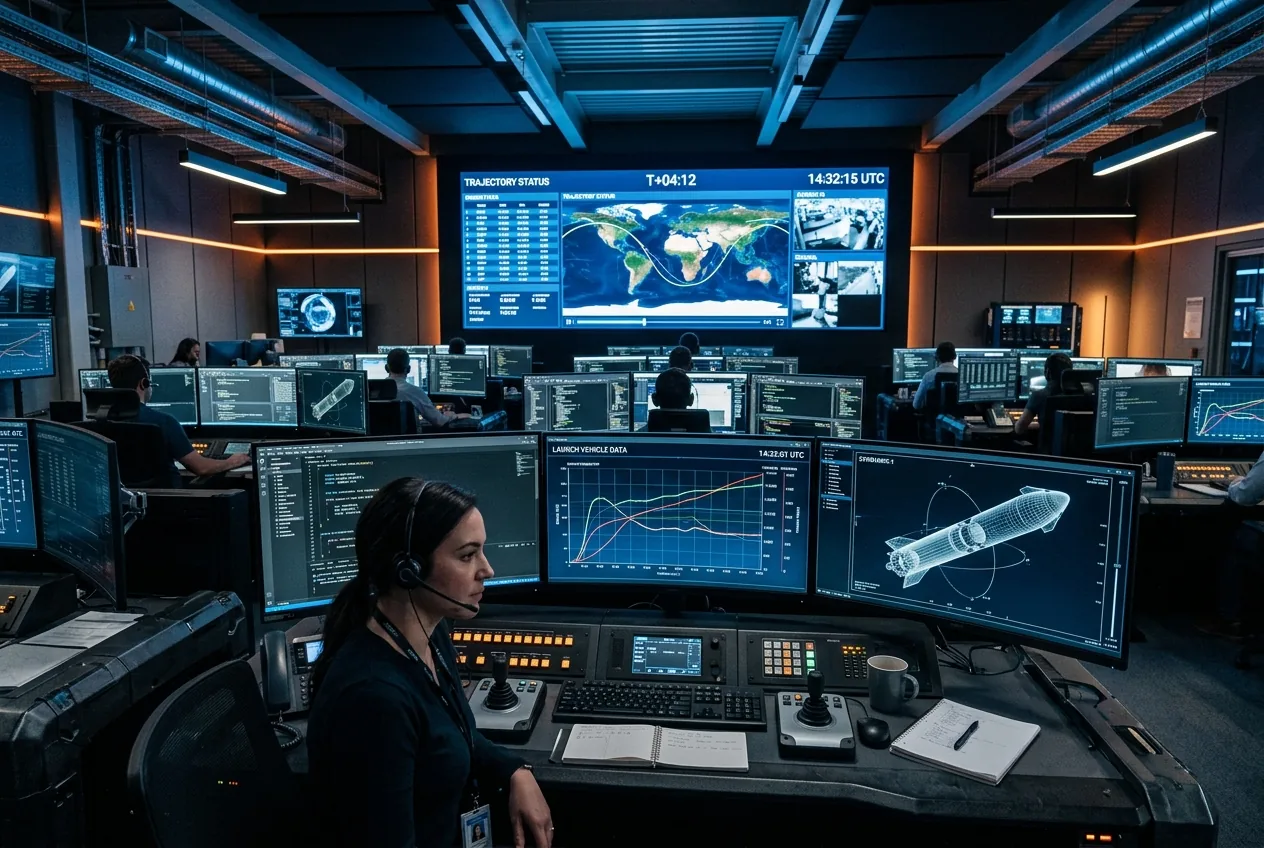
In an industrial maneuver of unprecedented scale and speed, SpaceX has finalized a $60 billion transaction to absorb Anysphere, the developer behind the ubiquitous AI-assisted programming environment Cursor. Closing just four days after an extraordinary public market debut that shattered private capital records, the deal represents the largest pure-play software acquisition ever executed by an aerospace manufacturer. Rather than viewing the purchase as an opportunistic venture into consumer software, the transaction must be understood through the lens of mission-critical systems engineering. SpaceX is moving aggressively to collapse the cycle time between hardware fabrication and flight-grade avionics deployment.
For decades, aerospace production lines have operated under a rigid operational asymmetry: metal can be bent, stamped, and welded far faster than the software governing it can be written, simulated, and formally verified. By taking direct ownership of Cursor and immediately binding its developer interface to the high-performance computing clusters of xAI, SpaceX is treating software development not as an administrative support function, but as an automated assembly line subject to the same relentless throughput metrics as its Starbase rocket factory.
The Aerospace Bottleneck Moves to the Terminal
Modern rocketry is fundamentally an exercise in distributed embedded computing operating under extreme thermal, vibrational, and acoustic loads. A single Starship vehicle integrates thousands of sensors, valve actuators, and cryogenic pressure transducers, all networked into real-time avionics stacks that execute autonomous guidance, navigation, and control (GNC) routines at microsecond intervals. The vehicle’s triple-redundant flight computers run deterministic C and C++ routines that must interface continuously with custom field-programmable gate arrays (FPGAs) and engine controller units (ECUs) mounted directly on the Raptor powerheads.
Historically, modifying this code to accommodate hardware alterations—such as repiping a liquid oxygen manifold or altering a hot-gas thruster pulse width—has required weeks of human-authored syntax revisions, peer review, and continuous integration testing. Engineers at Starbase often remark that while a physical engine swap can occur across a single shift, qualifying the flight computer’s firmware parameters to account for the new unit's exact hydraulic flow calibration frequently takes three times as long. Cursor’s proprietary codebase-indexing engine, which creates dynamic, persistent semantic graphs of massive software repositories, offers an immediate mechanism to eliminate that friction.
Symbiosis with the Colossus Infrastructure
The strategic value of this acquisition cannot be separated from the compute infrastructure currently operating under Elon Musk’s artificial intelligence venture, xAI. With the Colossus cluster in Memphis, Tennessee, scaling beyond 100,000 liquid-cooled Nvidia H100 and H200 GPUs, xAI possesses the computational density required to train foundation models specifically optimized for physics simulations and structural mechanics. Cursor provides the human-facing operational layer through which those models interact with living industrial pipelines.
Until now, commercial large language models adapted for programming have largely been generalists, fine-tuned on web application development, cloud service architectures, and consumer software frameworks. In aerospace, these generalist models regularly fail because they do not grasp strict hardware resource constraints, such as static memory allocation, deterministic execution schedules, and hard real-time interrupt handling. SpaceX’s integration plans involve fine-tuning Cursor’s underlying model routers directly against proprietary telemetry streams and hardware definition languages (HDLs) such as Verilog and VHDL.
When a SpaceX controls engineer seeks to optimize an active slosh-damping algorithm within the vehicle’s central propellant tanks, Cursor will not simply query a standard statistical model. Instead, it will interface directly with high-density clusters running computational fluid dynamics (CFD) simulations in parallel, synthesizing control code that has already been mathematically validated against modeled fluid behavior. This bridges the historically disconnected realms of digital control theory and mechanical execution into a unified, agentic interface.
Can Generative Models Meet Aerospace Determinism?
Standard aerospace development workflows adhere strictly to frameworks such as DO-178C, which mandate exhaustive requirements traceability, structural coverage analysis, and formal verification of all executable object code. Generative code assistants, by contrast, function by predicting tokens based on statistical correlation rather than mathematical proof. Integrating Cursor into safety-critical flight stacks requires SpaceX to construct a secondary, automated verification layer capable of inspecting AI-generated code with greater rigor than a human reviewer could ever muster.
To overcome this limitation, SpaceX is pairing Cursor with automated formal methods tools. As code is generated, background static analysis engines immediately verify memory bounds, evaluate worst-case execution time (WCET), and ensure that no dynamic memory allocation occurs outside of initialization phases. The synthesized routines are then automatically dispatched to hardware-in-the-loop simulators, where virtualized flight computers execute the code against simulated physical stresses before a human engineer ever signs off on a deployment pull request. This turns Cursor into an accelerated code generator operating inside an impermeable sandbox of formal mathematical constraints.
Managing the Starlink Constellation at Scale
While Starship captures headlines, the operational reality of SpaceX’s ongoing revenue engine lies in low Earth orbit. The Starlink constellation currently comprises thousands of operational satellites, each constantly recalculating inter-satellite optical laser links, phased-array beam configurations, and collision-avoidance maneuvers to dodge orbital debris. The constellation functions as an enormous, globally distributed mesh computer operating in the hostile environment of space, where single-event upsets caused by solar radiation are a constant reality.
Orchestrating a constellation of this scale has stretched conventional network engineering to its theoretical limits. Telemetry pipelines process terabytes of diagnostic data per minute, monitoring battery thermal runaways, reaction wheel degradation, and solar array articulation torque. When unexpected atmospheric drag anomalies occur—such as those triggered by geomagnetic storms—ground stations must deploy autonomous constellation-wide orbital adjustments in near-real time.
SpaceX intends to deploy Cursor’s semantic analysis engines across this operational network, allowing automated systems engineers to query fleet-wide health data through natural language and immediately generate validated patch routines. If a specific batch of reaction wheels exhibits anomalous friction spikes at low temperatures, Cursor can identify every satellite carrying that specific hardware revision, cross-reference its thermal profile, and generate a tailored firmware update that modifies heating cycles and torque limits without interrupting customer data routing.




Comments
No comments yet. Be the first!