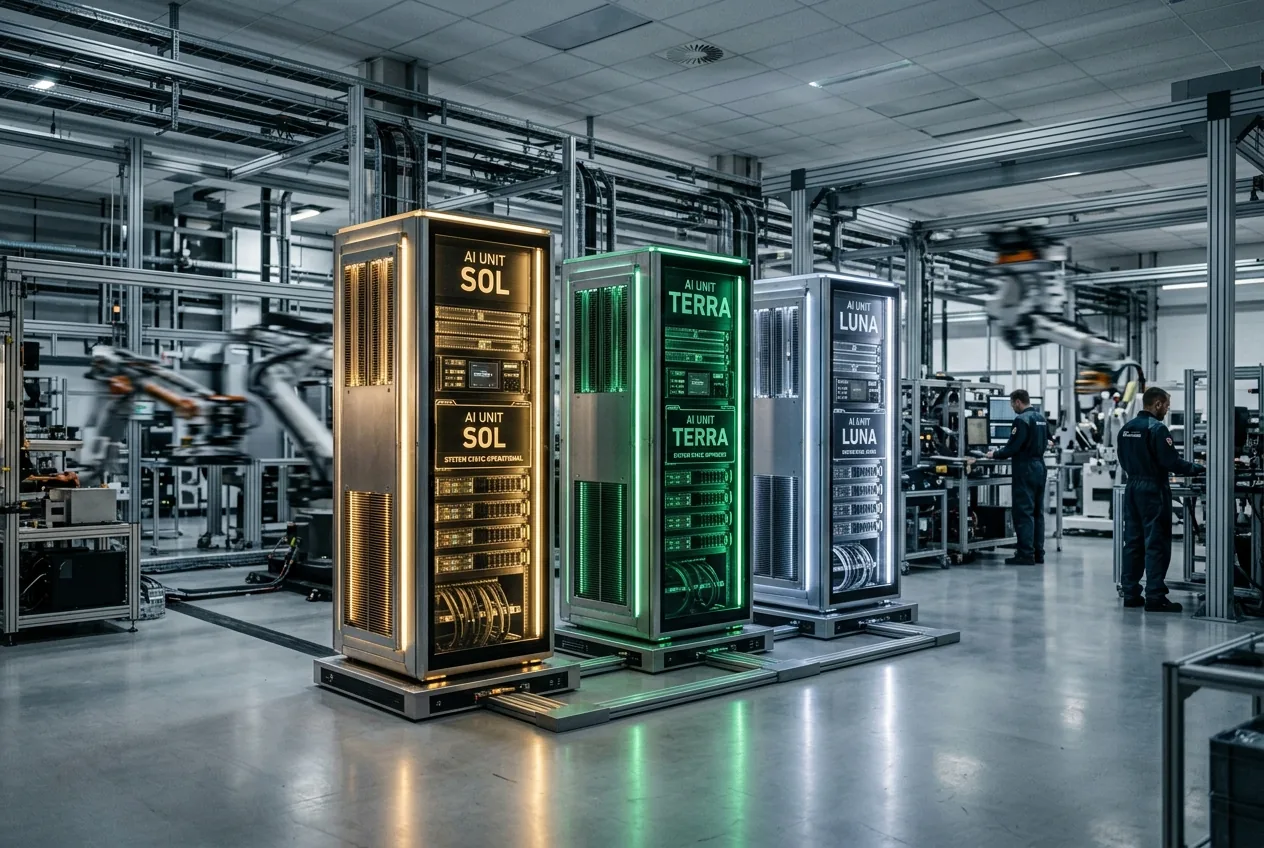
After a period of atypical silence and a restricted preview phase that left the broader tech industry speculating, OpenAI has officially announced the general availability of its GPT-5.6 model family. Starting July 9, the tiered architecture—comprising the Sol, Terra, and Luna models—will be accessible to the public. This rollout marks a fundamental shift in how the industry approaches Large Language Model (LLM) deployment, moving away from the "one-size-fits-all" monolith toward a specialized, task-oriented hierarchy designed for industrial and commercial scale.
The journey to this launch was not without friction. Since the initial unveiling of GPT-5.6 on June 26, access was strictly sequestered to roughly 20 trusted partners. From a technical and economic perspective, this delay was not merely a matter of bug testing or server scaling. Instead, it was the result of a significant intersection between frontier technology and national security interests. As these models become more capable of complex reasoning and autonomous execution, the oversight from the US government has intensified, signaling a new era of regulated artificial intelligence.
The Engineering Logic of the 5.6 Family
For those of us focused on the mechanical and industrial application of AI, the most significant update is the abandonment of the single-model strategy. In the past, developers had to choose between the high-latency, high-cost "flagship" model or a stripped-down "turbo" version that often lacked the reasoning depth required for complex tasks. With GPT-5.6, OpenAI is introducing a three-pillar structure: Sol, Terra, and Luna. Each represents a specific optimization of the compute-reasoning-cost triangle.
Sol is the flagship. It is designed for high-stakes environments—specifically advanced coding, cybersecurity, and what OpenAI calls "Max" and "Ultra" reasoning modes. These modes allow the model to pause, re-evaluate its logic, and perform deeper simulations before providing an output. In an industrial setting, Sol is the model you would use for system architecture design or the high-level orchestration of a complex supply chain. It is not designed for speed, but for mechanical precision and the avoidance of logical failure.
Terra serves as the "balanced" middle child. It is the workhorse model intended for everyday workflows. From an engineering standpoint, Terra is likely optimized for a higher throughput-to-accuracy ratio than its predecessors. It is intended for tasks where the context window remains large, but the complexity of the reasoning doesn't require the heavy-duty compute cycles of the Sol Max mode. This is the model that will likely see the most use in general enterprise software integration.
Luna rounds out the family as the speed-and-cost-optimized variant. For roboticists and those working in edge computing, Luna is perhaps the most interesting development. It features a lightweight architecture that minimizes latency, making it the primary candidate for real-time human-machine interaction and simple sensor-data interpretation. If Sol is the brain of the operation, Luna is the nervous system—fast, reactive, and efficient.
Why the US Government Put the Brakes on OpenAI
This isn't an isolated incident. Anthropic, a primary rival in the frontier model space, faced similar hurdles with its Claude Fable and Mythos models earlier this year. Anthropic was essentially forced to suspend access to its top-tier models to comply with export controls before reaching a resolution with the Commerce Department on July 1. The fact that OpenAI had to wait until a "green light" from government leadership was obtained underscores a new reality: AI is now viewed as a dual-use technology, much like advanced semiconductors or aerospace hardware.
From a pragmatic business perspective, this regulatory bottleneck introduces a new layer of risk for tech deployments. Companies can no longer assume a global day-one launch for every feature. The "Sol" model, with its cybersecurity capabilities, likely underwent the most rigorous testing to ensure it wouldn't inadvertently lower the barrier for designing sophisticated digital attacks. With the lifting of these restrictions this week, we are seeing the first clear path forward for how frontier AI companies will navigate the balance between rapid innovation and national safety compliance.
Agentic Evolution: Sol’s Impact on Industrial Automation
Beyond the raw benchmarks, the most promising technical advancement in the 5.6 family is the improvement in "long-running agentic tasks." In previous iterations, AI models often suffered from "context drift" or logical degradation during multi-step processes. If you asked a model to manage a three-day logistics workflow involving dozens of variables, the model would eventually lose the thread of the original objective.
GPT-5.6 Sol, particularly in its Max reasoning mode, is engineered to mitigate this. For robotics and supply chain technology, this is a critical leap. An "agentic" model is one that can break down a high-level goal—such as "re-route all delayed shipments across the Eastern Seaboard while maintaining current fuel budgets"—into hundreds of sub-tasks and execute them autonomously over an extended timeframe. This requires a level of internal consistency that we haven't seen in the consumer-facing models of the past.
In a factory setting, these agentic improvements mean a robotic fleet could theoretically use GPT-5.6 Sol as a central controller to diagnose mechanical failures across multiple units, order replacement parts, and reschedule shifts without human intervention. The "long-running" aspect is key here; it suggests that the model's memory management and state-tracking have been overhauled to handle persistence in a way that GPT-4 simply could not.
The Competitive Landscape: Sol vs. Fable
For the user, this competition is beneficial. It forces both companies to be transparent about their pricing and latency profiles. Luna is clearly a direct response to the market's need for cheaper inference, while Sol is a defensive move to maintain OpenAI's reputation for having the highest ceiling of intelligence. The choice between the two often comes down to the specific "mechanical" needs of the project: do you need the poetic nuance and safety-first guardrails of Claude, or the raw, agentic horsepower and reasoning modes of Sol?
As we move into the second half of 2026, the arrival of GPT-5.6 confirms that the era of the monolithic AI model is over. We are now entering an era of specialized toolsets where the value lies not just in the intelligence of the model, but in the efficiency of its deployment. For industries relying on robotics and complex automation, the Sol, Terra, and Luna family provides a more nuanced toolkit for building the next generation of autonomous systems. The rollout beginning this Thursday will be the true test of whether these models can live up to their engineering promises under the weight of global demand.




Comments
No comments yet. Be the first!