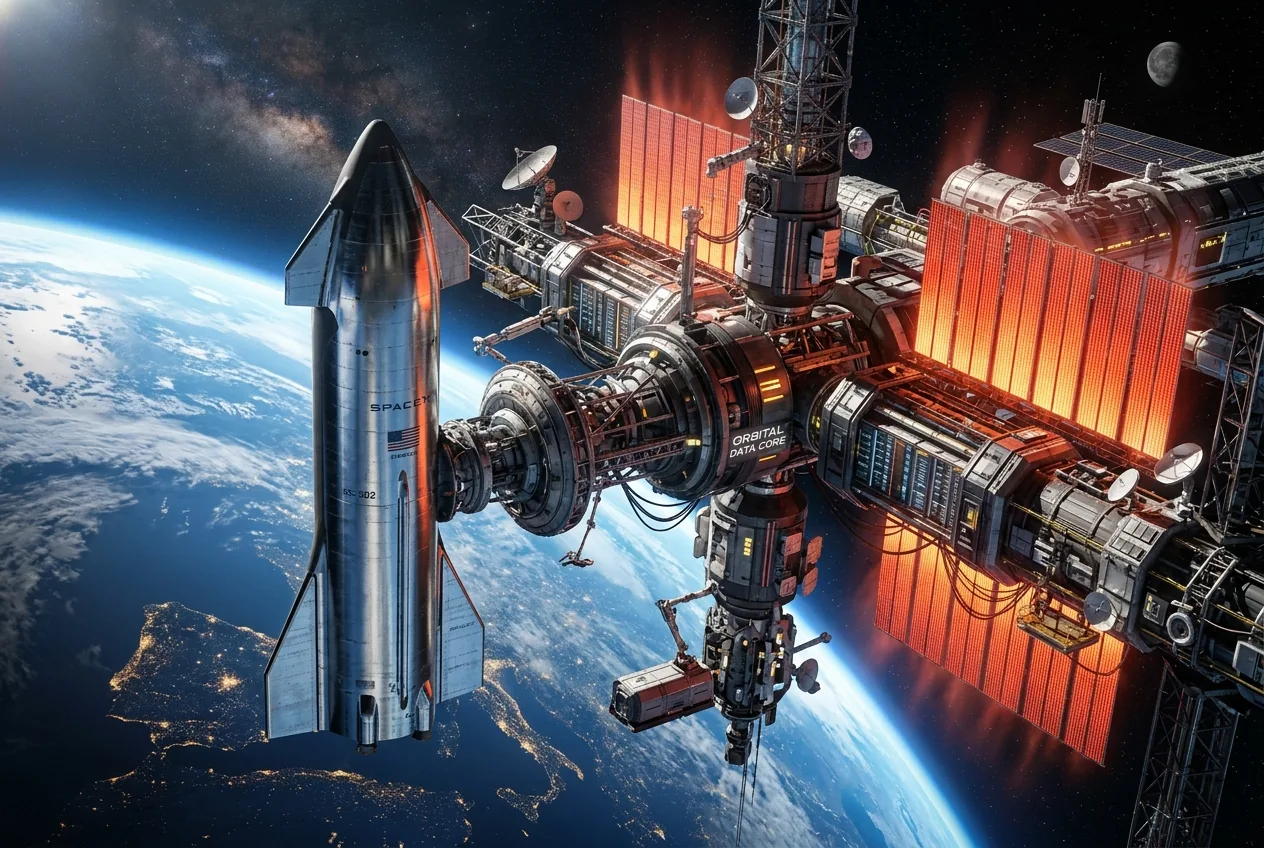
The long-anticipated transition of SpaceX from a private aerospace powerhouse to a public industrial titan has begun. Following the confidential filing of its S-1 registration statement with the U.S. Securities and Exchange Commission, the company is poised for a mid-June debut on the Nasdaq under the ticker SPCX. This move follows the massive internal consolidation of Elon Musk’s artificial intelligence venture, xAI, into the SpaceX corporate structure—a merger that has revalued the combined entity at a staggering $1.25 trillion to $2 trillion. For the global industrial and financial sectors, this is not merely a stock offering; it is the formalization of a vertically integrated conglomerate designed to dominate the infrastructure of the next century.
The filing provides the first comprehensive look at the financial machinery driving Musk’s ambitions. In the first quarter of 2026, SpaceX reported revenue of $4.69 billion. While this reflects the growing dominance of the Starlink satellite constellation, the bottom line tells a more complex story of aggressive capital expenditure. The company posted a net loss of $4.28 billion for the same period. To an analyst focused on mechanical efficiency and industrial output, these figures represent the friction of rapid scaling. The losses are largely attributed to the voracious capital requirements of the Starship development program and the recent absorption of xAI’s heavy infrastructure costs.
To understand the economic viability of this IPO, one must look at the divergence between the company’s distinct business units. Starlink remains the primary engine of liquidity. In Q1 2026, the satellite internet division generated approximately $3.2 billion in revenue, yielding an operating profit of $1.2 billion. With over 70 percent of the company’s total revenue projected to come from Starlink by the end of the year, the service has effectively transitioned from a speculative venture into a high-margin utility. This cash flow is critical, as it provides the baseline stability required to offset the high-risk, high-reward cycles of deep-space exploration and advanced AI development.
The logic of the xAI merger
The decision to merge xAI into SpaceX, rather than maintaining it as a standalone entity, signals a strategic shift toward integrated robotics and autonomous systems. Historically, xAI was a financial drag, incurring losses of $6.4 billion in 2025 alone. However, the S-1 filing frames AI as an "integral pillar" of the company’s mission. From a mechanical engineering perspective, the synergy is clear: the complexity of multi-planetary logistics and the management of a 10,000-satellite-per-year launch cadence require a level of computational autonomy that exceeds current aerospace standards.
Integrating xAI allows SpaceX to bake large-scale machine learning directly into its manufacturing and flight control systems. The merger effectively turns SpaceX into a robotics company that happens to build rockets. The vast amounts of data generated by Starlink's global network and the telemetry from Starship's test flights provide a unique training ground for specialized AI models. These models are intended to handle everything from autonomous orbital maneuvering to the robotic assembly of habitats on the lunar and Martian surfaces. This is a play for the total automation of the space economy.
Critics point to the $12.7 billion directed toward AI capital expenditures in 2025 as a sign of overextension. However, in the context of industrial automation, this investment is the prerequisite for the next stage of SpaceX’s evolution. By internalizing these costs, SpaceX avoids the inefficiencies of third-party software dependencies and ensures that its hardware and intelligence layers are developed in lockstep. The goal is a seamless loop where AI optimizes the production line of the Falcon and Starship boosters, which in turn deploy the infrastructure that powers the AI.
Governance and the trillion-dollar valuation
The structure of the IPO is designed to maintain absolute executive control. Elon Musk currently retains approximately 42 percent of the equity in SpaceX, but a dual-class share structure will grant him over 85 percent of the voting power post-IPO. This ensures that the company’s long-term engineering goals—specifically the colonization of Mars—cannot be easily derailed by quarterly shareholder demands for short-term profitability. For investors, this creates a unique risk profile: they are betting not just on a business model, but on the continued focus and stability of a single individual.
The financial stakes for Musk are unprecedented. Should the IPO proceed at the upper end of its valuation range, Musk’s personal net worth could exceed $1 trillion, making him the first person in history to reach that milestone. This concentration of wealth is a direct result of the "Musk-glomerate" strategy, where the successes of one company are leveraged to fund the high-risk phases of another. The SpaceX IPO represents the ultimate realization of this strategy, providing the massive capital injection needed to push Starship into its operational phase without relying solely on private funding rounds.
The market’s reception of the offering remains the great unknown. While institutional interest is high, the company faces significant regulatory hurdles. The Federal Aviation Administration has already indicated that SpaceX needs to demonstrate significantly higher reliability and safety standards before it can achieve its goal of 10,000 satellite launches annually. Furthermore, the inclusion of xAI brings with it the baggage of the broader AI industry’s legal and ethical controversies. Investors will have to weigh the proven revenue of Starlink against the volatile burn rate of xAI and the unproven long-term economics of Mars colonization.
Industrial scale and the path to June 12
As the June 12 target date for the Nasdaq debut approaches, the focus is shifting toward the company's hardware readiness. SpaceX is currently pushing a 5-for-1 stock split to lower the barrier for retail entry, a move that suggests a desire for broad-based public support. Yet, for the engineering community, the real story is in the manufacturing facilities in Boca Chica and McGregor. The IPO capital is earmarked for the mass production of the Raptor engine and the completion of the second Starbase launch site. These are the physical assets that back the $2 trillion valuation.
The industrial scale required to justify this IPO is nearly incomprehensible. To hit its internal targets, SpaceX must transition from being a launch provider to a high-volume manufacturer of spacecraft. This requires a level of supply chain mastery that matches or exceeds the automotive industry’s most efficient lines. By integrating AI into the heart of this manufacturing process, SpaceX is attempting to solve the bottleneck of aerospace production—the high cost of precision at scale.
Ultimately, the SpaceX IPO is a test of whether the public market can sustain a multi-decade engineering project. It is a pivot from the closed, secretive world of private equity into the transparency of the public markets, but with the guardrails of dual-class shares. If successful, it will set the template for the next generation of industrial technology companies, where software and hardware are no longer distinct silos but a single, integrated machine designed to operate across planetary boundaries.




Comments
No comments yet. Be the first!